
If you work with multilingual content, you already know how quickly things can get complicated.
Managing translation and localization projects across different markets, keeping terminology consistent, and staying on top of deadlines is no small task, especially as projects scale.
That’s why more and more companies rely on Translation Management Systems (TMS). These platforms help organize the entire localization process, from assigning tasks to translators to storing translation memories and automating repetitive steps.
But with so many tools available, choosing the right one isn’t always straightforward. To give you a clearer picture of the current landscape, we’ve also looked at industry data and insights from Nimdzi, a well-known research and consulting firm in the localization space.
In this article, you’ll find an overview of 10 of the most widely used TMS solutions, along with their main advantages.
Managing translation and localization projects across different markets, keeping terminology consistent, and staying on top of deadlines is no small task, especially as projects scale.
That’s why more and more companies rely on Translation Management Systems (TMS). These platforms help organize the entire localization process, from assigning tasks to translators to storing translation memories and automating repetitive steps.
But with so many tools available, choosing the right one isn’t always straightforward. To give you a clearer picture of the current landscape, we’ve also looked at industry data and insights from Nimdzi, a well-known research and consulting firm in the localization space.
In this article, you’ll find an overview of 10 of the most widely used TMS solutions, along with their main advantages.
1. Crowdin
Crowdin is a leading AI-powered localization platform that streamlines multilingual content management for software, websites, and more.
By integrating with over 750 apps and 100+ file formats, it enables global teams to deliver native user experiences through precision tools like AI Context Harvester and Translation Memory.
Trusted by major organizations such as Microsoft and GitHub, the platform also offers enterprise-level scalability and recently expanded into multimedia with the 2025 launch of Crowdin Dubbing Studio, providing context-aware AI transcription and voice dubbing.
By integrating with over 750 apps and 100+ file formats, it enables global teams to deliver native user experiences through precision tools like AI Context Harvester and Translation Memory.
Trusted by major organizations such as Microsoft and GitHub, the platform also offers enterprise-level scalability and recently expanded into multimedia with the 2025 launch of Crowdin Dubbing Studio, providing context-aware AI transcription and voice dubbing.
Main Features:
2. Smartling
Smartling is a translation technology and services company that helps major brands localize websites, software, and documents through its LanguageAI Platform.
Key features include robust APIs and connectors, a web proxy, and automatic MT engine selection for efficient content delivery.
The platform also streamlines workflows with specialized tools like a WordPress widget and detailed productivity reporting.
Key features include robust APIs and connectors, a web proxy, and automatic MT engine selection for efficient content delivery.
The platform also streamlines workflows with specialized tools like a WordPress widget and detailed productivity reporting.

Main Features:
From Smartling...
3. Lokalise
Lokalise is an intuitive, automated localization platform designed for high-growth mid-market and enterprise companies.
It specializes in continuous localization, allowing engineering, product, and design teams to ship global features faster by delivering high-quality translations in minutes.
By bridging the gap between stakeholders, from developers using APIs to designers using Figma, it streamlines the entire lifecycle for industries where speed and accuracy are non-negotiable.
It specializes in continuous localization, allowing engineering, product, and design teams to ship global features faster by delivering high-quality translations in minutes.
By bridging the gap between stakeholders, from developers using APIs to designers using Figma, it streamlines the entire lifecycle for industries where speed and accuracy are non-negotiable.

Main Features:
4. Phrase
Phrase is an intuitive, cloud-based localization platform that helps global brands like Uber and Shopify scale through heavy automation.
As a vendor-neutral provider, it supports over 50 integrations and 30 machine translation engines, making it highly adaptable for both developers and localization managers.
The platform’s 2025 updates introduced advanced AI features like Auto Adapt for instant tone and variant adjustments, and MT Optimize for superior document-level fluency and terminology consistency.
As a vendor-neutral provider, it supports over 50 integrations and 30 machine translation engines, making it highly adaptable for both developers and localization managers.
The platform’s 2025 updates introduced advanced AI features like Auto Adapt for instant tone and variant adjustments, and MT Optimize for superior document-level fluency and terminology consistency.
Main Features:
5. wxkrs
Next on our list is wxkrs (formerly Bureau Works). We reached out to their founder and CEO, Gabriel Fairman, who shared his direct insights on how the platform is redefining the relationship between human creativity and machine intelligence.
Main Features:
6. Trados Enterprise
Trados Enterprise is the go-to TMS for global brands seeking a highly customizable, enterprise-grade ecosystem.
It excels at cutting through the noise of complex localization by centralizing workflows and leveraging deep automation.
Whether a company's needs are standard or highly specialized, Trados provides the architecture to translate any content type while staying true to internal brand standards
It excels at cutting through the noise of complex localization by centralizing workflows and leveraging deep automation.
Whether a company's needs are standard or highly specialized, Trados provides the architecture to translate any content type while staying true to internal brand standards

Main Features:
7. POEditor
POEditor is a cloud-based localization platform engineered to bridge the gap between development and translation teams.
Originally launched in 2012, the platform has evolved into a comprehensive management system capable of handling complex, continuous localization workflows across dozens of file formats.
Its ability to balance simplicity with powerful functionality has made it a trusted choice for industry giants, including Adidas, Vodafone, Bosch, and Volvo, who rely on it to scale their global content without the overhead of more cumbersome enterprise systems.
Originally launched in 2012, the platform has evolved into a comprehensive management system capable of handling complex, continuous localization workflows across dozens of file formats.
Its ability to balance simplicity with powerful functionality has made it a trusted choice for industry giants, including Adidas, Vodafone, Bosch, and Volvo, who rely on it to scale their global content without the overhead of more cumbersome enterprise systems.

Main Features:
8. XTM Cloud
XTM Cloud is a premier, vendor-neutral TMS built for massive scalability. It centralizes the localization lifecycle into an AI-driven ecosystem, enabling global brands to communicate in over 220 languages with speed and precision.
Trusted by leaders like Firestone and FARFETCH, XTM Cloud is proven to reduce localization costs by up to 60% and boost volume output by 250%.
By combining advanced workflow automation with real-time analytics, it transforms translation from a bottleneck into a strategic growth engine.
Trusted by leaders like Firestone and FARFETCH, XTM Cloud is proven to reduce localization costs by up to 60% and boost volume output by 250%.
By combining advanced workflow automation with real-time analytics, it transforms translation from a bottleneck into a strategic growth engine.
Main Features:
9. memoQ TMS
Since 2004, memoQ has been a staple in the localization industry, prized for its flexibility and deep focus on the translator experience.
It is widely recognized for its high interoperability, allowing linguists to export files from other systems to work within the superior memoQ environment.
Often paired with business tools like Plunet or XTRF, it serves as a powerful language management hub for LSPs and enterprises alike.
In 2026, its desktop editor remains the gold standard for professionals, offering advanced file filters, voice integration, and a legendary concordance search that keeps it ahead of more rigid cloud-only competitors.
It is widely recognized for its high interoperability, allowing linguists to export files from other systems to work within the superior memoQ environment.
Often paired with business tools like Plunet or XTRF, it serves as a powerful language management hub for LSPs and enterprises alike.
In 2026, its desktop editor remains the gold standard for professionals, offering advanced file filters, voice integration, and a legendary concordance search that keeps it ahead of more rigid cloud-only competitors.
Main Features:
10. Transifex
Transifex is a leading localization platform built for the high-velocity needs of modern software and marketing teams.
A defining milestone was its 2025 acquisition by XTM International, which fused Transifex’s "developer-first" agility with XTM’s enterprise governance.
Trusted by brands like Atlassian and Waze, the platform leverages Transifex AI and its unique Quality Index (TQI) to deliver human-quality translations at scale.
A defining milestone was its 2025 acquisition by XTM International, which fused Transifex’s "developer-first" agility with XTM’s enterprise governance.
Trusted by brands like Atlassian and Waze, the platform leverages Transifex AI and its unique Quality Index (TQI) to deliver human-quality translations at scale.
Main Features:
Conclusion
Choosing the right Translation Management System is about finding a tool that fits your workflow, your team, and your long-term goals. As we’ve seen, today’s TMS solutions go far beyond simple translation support.
They combine automation, AI, and collaboration tools to help companies scale their localization efforts more efficiently than ever.
The key is to clearly define your priorities: integration capabilities, automation level, linguistic quality, or cost control. The expert insights shared throughout this article highlight an important point: technology works best when it supports human expertise, not replaces it.
They combine automation, AI, and collaboration tools to help companies scale their localization efforts more efficiently than ever.
The key is to clearly define your priorities: integration capabilities, automation level, linguistic quality, or cost control. The expert insights shared throughout this article highlight an important point: technology works best when it supports human expertise, not replaces it.
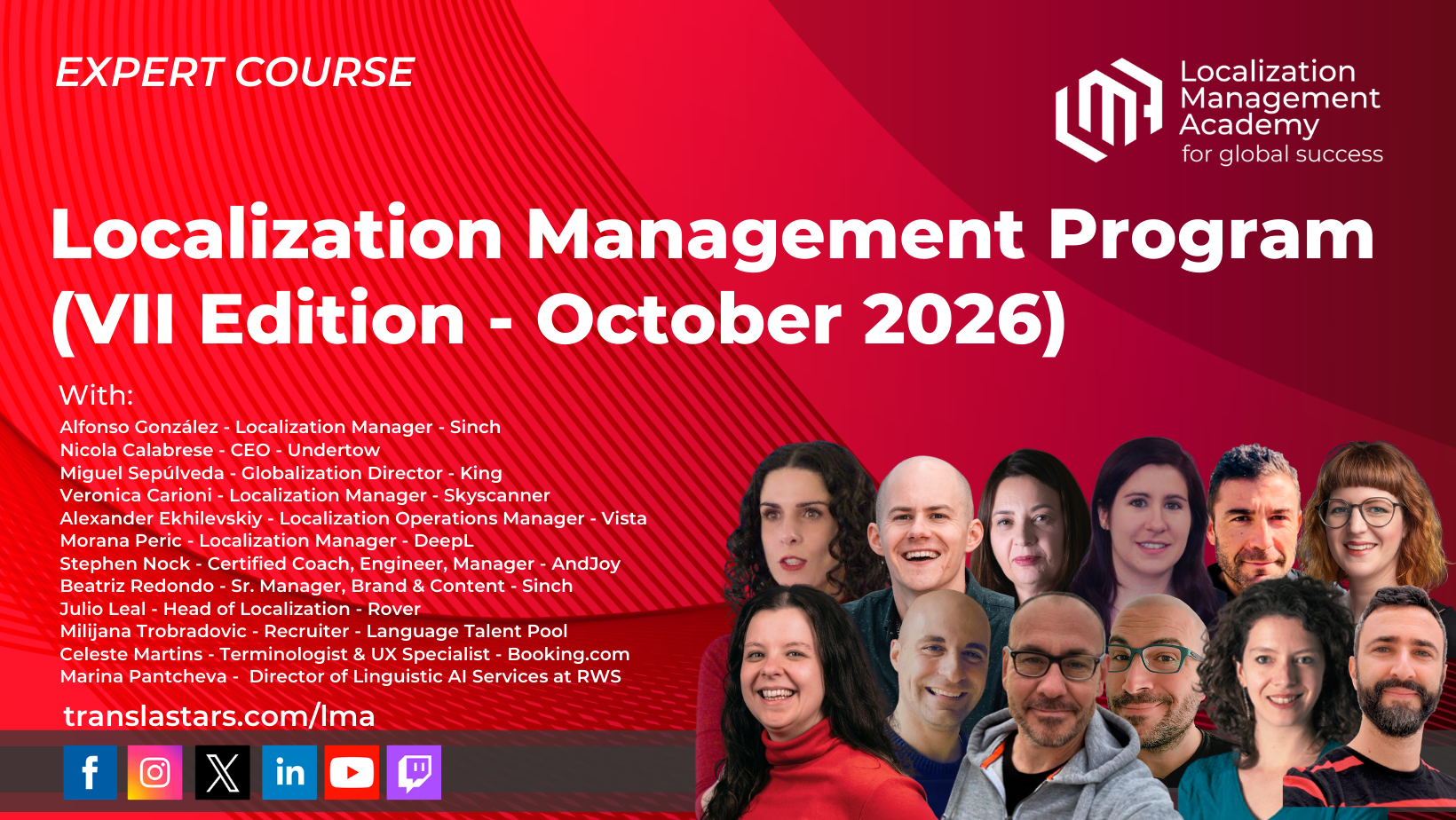
For professionals looking to strengthen their strategic and operational skills, the TranslaStars Localization Management Academy offers a practical, hands-on approach to mastering localization workflows, vendor management, and TMS ecosystems. It’s designed for those who want to move beyond day-to-day tasks and take on more decision-making roles within localization teams.




Courses
Free Courses/Resources
LMA
TranslaStars University
Media Library
Contact
Support / Help / Documentation
Data