
Artificial Intelligence is rapidly transforming the language industry. From translation and terminology management to transcription, subtitling, and workflow automation. AI tools are helping translators, interpreters, and localization professionals work faster and more efficiently.
However, AI is not replacing language experts. Instead, it is becoming an essential part of their professional toolkit. Today's language professionals increasingly combine multiple technologies to support their work.
The result is a more dynamic and productive workflow where AI assists with repetitive or time-consuming tasks, allowing linguists to focus on what they do best: understanding context, ensuring accuracy, and delivering culturally appropriate communication.
With new solutions appearing every year, it can be difficult to know which tools are truly worth exploring.
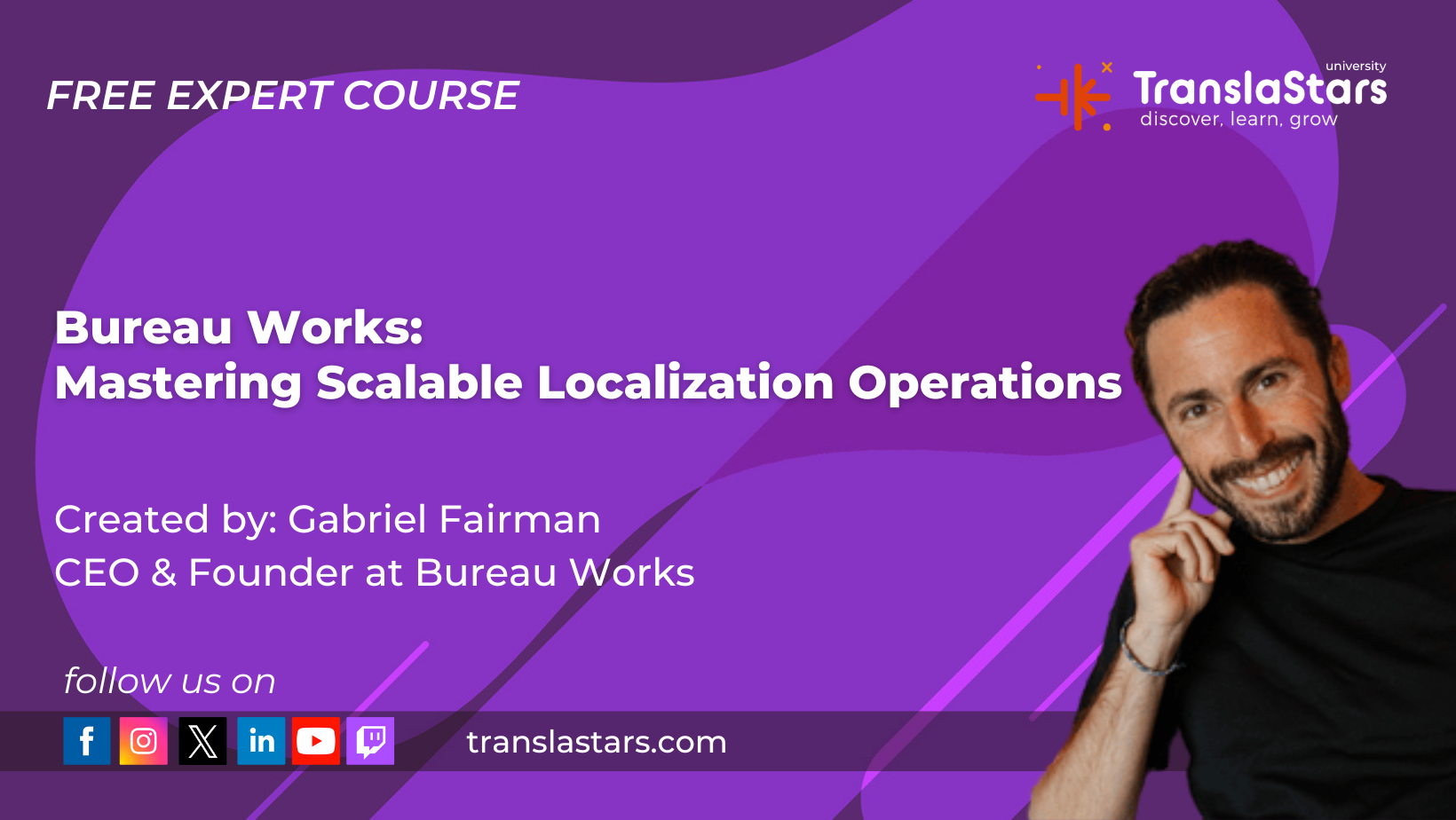
In this article, we present 10 of the best AI tools for translators, interpreters, and language professionals in 2026, provided by our top experts Monica Albini, Ekaterina Chashnikova, Celeste Martins, and Gabriel Fairman.
Whether you are a freelance translator, interpreter, project manager, or localization specialist, these tools can help you improve productivity, streamline workflows, and stay competitive in a rapidly evolving industry.
However, AI is not replacing language experts. Instead, it is becoming an essential part of their professional toolkit. Today's language professionals increasingly combine multiple technologies to support their work.
The result is a more dynamic and productive workflow where AI assists with repetitive or time-consuming tasks, allowing linguists to focus on what they do best: understanding context, ensuring accuracy, and delivering culturally appropriate communication.
With new solutions appearing every year, it can be difficult to know which tools are truly worth exploring.
In this article, we present 10 of the best AI tools for translators, interpreters, and language professionals in 2026, provided by our top experts Monica Albini, Ekaterina Chashnikova, Celeste Martins, and Gabriel Fairman.
Whether you are a freelance translator, interpreter, project manager, or localization specialist, these tools can help you improve productivity, streamline workflows, and stay competitive in a rapidly evolving industry.
1. Pairaphrase
Pairaphrase is document-first AI translation management software built for secure, governed workflows. It helps language service providers, localization teams, and organizations translate, manage, and refine multilingual files and content at scale while maintaining formatting, terminology, and process control.
Supporting 160+ languages, 27,000+ language pairs, and 30+ file types, Pairaphrase brings document translation, AI translation orchestration, collaboration, terminology management, and governed content review into one centralized platform.
Designed to be easy to use and straightforward to deploy, the platform provides access to multiple Machine Translation engines, including DeepL, Google Translate, Microsoft Translator, ChatGPT, and PairaphraseGPT.
It also incorporates Translation Memory and Terminology Management capabilities, helping translators and localization teams maintain consistency across projects while reducing repetitive work.
Integrations with Okta, Google Drive, ClassLink, Google Workspace, Canva, Slack, and API connectivity support translation workflow orchestration within existing technology ecosystems while preserving formatting across PDFs, Microsoft Office files, images, and scanned documents.
It also incorporates Translation Memory and Terminology Management capabilities, helping translators and localization teams maintain consistency across projects while reducing repetitive work.
Pairaphrase supports hybrid AI + human review workflows, allowing language professionals to combine automation with human expertise. Formatting preservation, OCR support, and multilingual content generation capabilities further help streamline translation and localization processes.
For organizations handling sensitive information, Pairaphrase includes enterprise-grade security and governance features such as encrypted storage, Role-Based Access Control (RBAC), auditability, and workflow controls. The platform supports organizations operating within frameworks commonly aligned with HIPAA, FERPA, GDPR, SOC 2 Type II, ISO 27001, and PCI.
Integrations with Okta, Google Drive, ClassLink, Google Workspace, Canva, Slack, and API connectivity support translation workflow orchestration within existing technology ecosystems while preserving formatting across PDFs, Microsoft Office files, images, and scanned documents.
2. MachineTranslation.com
Most machine translation tools give you one answer and expect you to trust it. The problem is you rarely know when that single engine got a term wrong, until a reviewer or client catches it.
MachineTranslation.com takes a different approach: instead of relying on one engine, it runs the same text through 22 AI models simultaneously, including ChatGPT, Claude, Gemini, DeepL, and Google Translate, and its SMART consensus system highlights the version the majority of models agree on.
For translators and interpreters, this is useful earlier in the workflow than a typical MT engine. Rather than accepting a single machine draft at face value, you can see exactly where models agree and where they diverge, disagreement between models is often the clearest signal that a term, idiom, or register choice needs a closer human look before it goes any further.
Main features include:
- Side-by-side comparison of 22 AI translation models on the same source text
- SMART consensus output, showing the translation most models agree on
- Document translation (PDF, DOCX, and more) with layout preserved
- Support for 330+ languages
- Optional certified human post-editing for legal, medical, or high-stakes content, provided through Tomedes, the translation company behind the platform
- Free to start, with paid plans for unlimited use
Best for: translators and project managers who want a fast way to flag where MT output is uncertain before committing review time to it, rather than trusting a single engine's confident-sounding guess.
3. Lara Translate
Most AI translation tools give you speed or context, rarely both. Generic chatbots miss your terminology, and fast machine translation flattens tone the moment the text turns technical.
Lara Translate is professional-grade AI translation built to close that gap. Created by Translated, a company working in professional language services since 1999, it is trained on over 25 million human-translated documents and combines LLM reasoning with the low latency of neural machine translation. It reads the context before it commits to a word.
For working translators and interpreters, the professional layer is where it earns its place. You can build Translation Memories from your own edits and enforce exact terminology with case-sensitive glossaries, then reuse both across every project. Three translation styles (Faithful, Fluid, and Creative) let you match register to the job, and Alternative Translations surface other options with an explanation of why each one fits. It handles 70 file formats, including XLIFF, PO, and SRT, images, audio, and preserves layout on the way out.
It fits existing workflows instead of replacing them. Lara Translate offers official plugins for Trados Studio and memoQ, and works with Matecat, Wordfast, and Wordscope. For no-code and low-code automation it connects through n8n and Zapier, and its Translation API, CLI, and MCP server let teams build custom pipelines or plug Lara Translate into assistants like Claude, Perplexity, and Langdock. Interpreters get a real-time bilingual Interpreter Mode on web and mobile.
On privacy, Lara Translate is an EU (Italian) company and fully GDPR-compliant, with an Incognito Mode that keeps zero record of what you translate. You can try it on a real client text and see how it handles your terminology and formatting before it goes anywhere near a deadline.
4. YesChat
Preparing a glossary is often one of the most time-consuming steps in translation and interpreting projects. The AI Term Extractor available on YesChat helps streamline this process by automatically identifying domain-specific terminology from documents, web pages, or pasted text.
Powered by AI, the tool analyzes the vocabulary, context, and structure of a document to extract key terms that are relevant to a specific field, such as legal, medical, or technical content.
It can perform both monolingual and bilingual term extraction, making it particularly useful for translators who need to quickly identify terminology and possible equivalents in different languages.
For interpreters preparing for assignments or translators starting large projects, this type of tool can significantly reduce preparation time. By generating an initial glossary automatically, linguists can focus on validating and refining terminology rather than identifying it manually.
Ekaterina adds: "It can be a great tool for interpreters who need a quick glossary to prepare for a job or for translators who need a glossary for a large project (especially if several translators and reviewers are involved)."
It can perform both monolingual and bilingual term extraction, making it particularly useful for translators who need to quickly identify terminology and possible equivalents in different languages.
For interpreters preparing for assignments or translators starting large projects, this type of tool can significantly reduce preparation time. By generating an initial glossary automatically, linguists can focus on validating and refining terminology rather than identifying it manually.
Ekaterina adds: "It can be a great tool for interpreters who need a quick glossary to prepare for a job or for translators who need a glossary for a large project (especially if several translators and reviewers are involved)."
5. Cavya.ai
Going on with Ekaterina's suggestions, Cavya.ai has a useful Document Analyzer that provides a structured and very thorough analysis of a document for translation.
It can be helpful to project managers and to linguists facing a new project of a type they have not worked with.
It can be helpful to project managers and to linguists facing a new project of a type they have not worked with.
In addition to document analysis, Cavya can automatically generate context-rich glossaries and style guides tailored to the document type, audience, and target language. These resources help translators and reviewers maintain consistent terminology, tone, and formatting across projects.
For translators and project managers working with unfamiliar content or complex technical documents, tools like Cavya can provide a clear overview of the project before translation even begins, turning what would normally take hours of preparation into a structured report generated in just a few minutes.
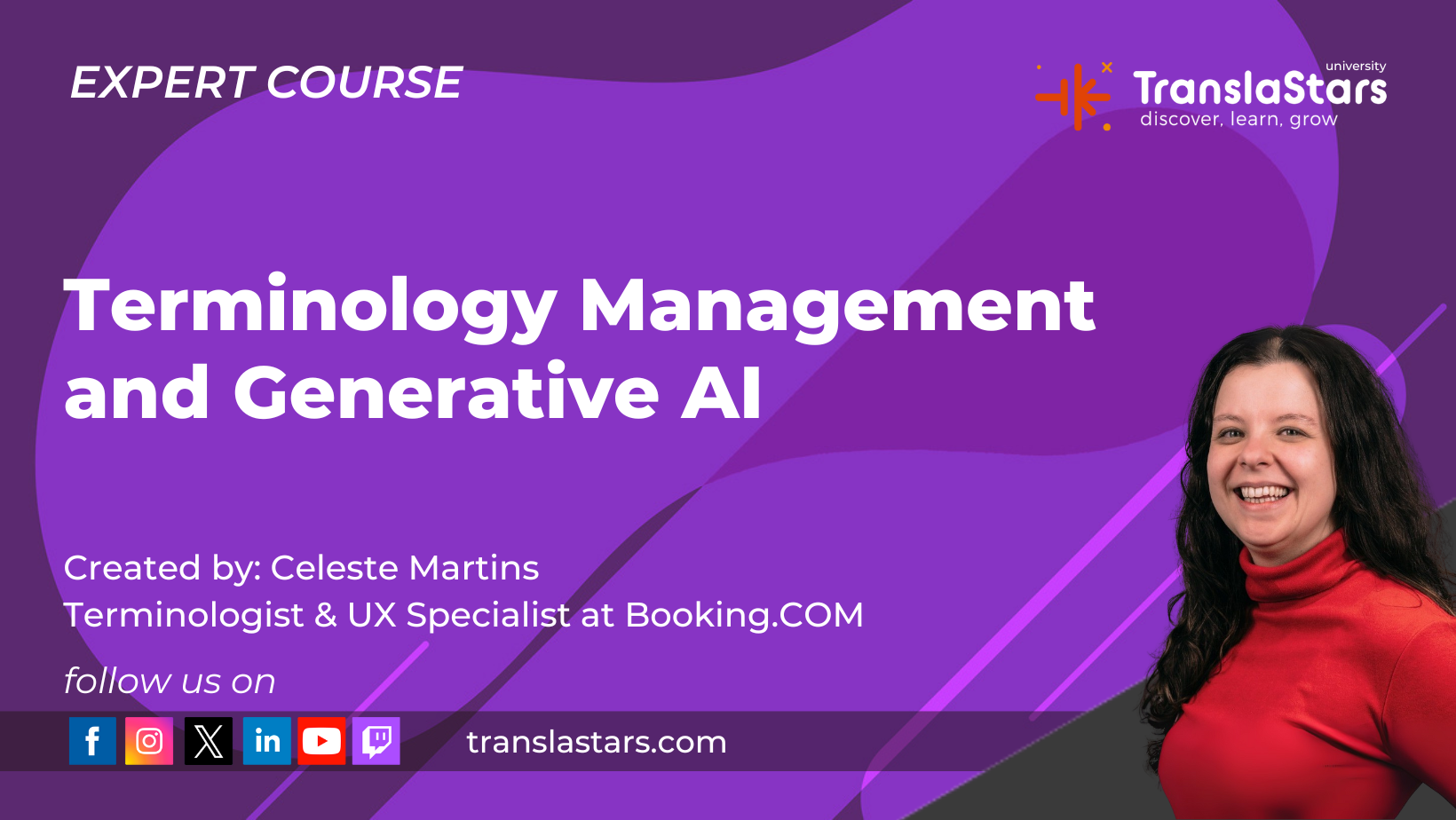
Speaking of terminology, don't miss the course Terminology Management and Generative AI, hosted by Celeste Martins, who will show you how terminology evolves from a traditional linguistic discipline into a strategic AI enabler.
For translators and project managers working with unfamiliar content or complex technical documents, tools like Cavya can provide a clear overview of the project before translation even begins, turning what would normally take hours of preparation into a structured report generated in just a few minutes.
Speaking of terminology, don't miss the course Terminology Management and Generative AI, hosted by Celeste Martins, who will show you how terminology evolves from a traditional linguistic discipline into a strategic AI enabler.
6. HeyGen
Video content is becoming increasingly important in global communication, training, and marketing. HeyGen is an AI-powered platform that allows users to create professional videos using AI avatars, voice generation, and automated translation tools, making it particularly useful for multilingual content creation.
7. ElevenLabs
ElevenLabs is widely known for its advanced voice generation technology, but the platform has also become a powerful tool for transcription, subtitling, and multilingual audio workflows. This makes it particularly valuable for translators and audiovisual localization professionals working with podcasts, interviews, webinars, and video content.
8. Phrase TMS
Among the best 2026 AI tools, Celeste Martins mentions Phrase TMS.
"It has significantly expanded its AI stack (especially 2023–2026), though it might be more useful to businesses or more established translators rather than beginners due to pricing."
"It has significantly expanded its AI stack (especially 2023–2026), though it might be more useful to businesses or more established translators rather than beginners due to pricing."
9. ChatGPT, Gemini, Claude
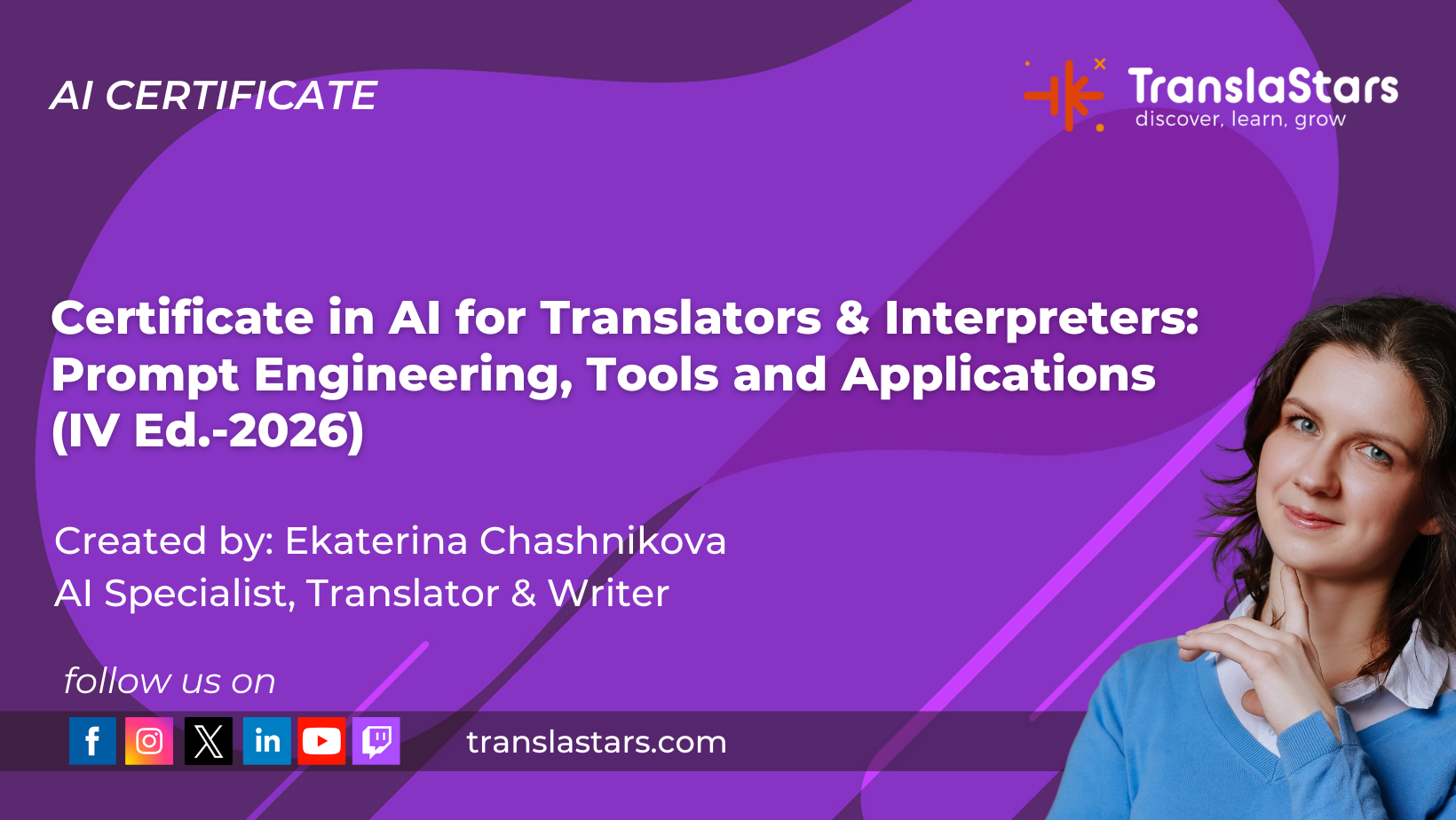
Large Language Models (LLMs) like ChatGPT, Gemini, and Claude have become indispensable tools for translators, interpreters, and language professionals.
Unlike traditional machine translation engines, these AI models act as versatile linguistic assistants, capable of understanding context, extracting terminology, summarizing content, and supporting creative or technical writing tasks.
These tools are particularly useful for:
Because LLMs are flexible and interactive, language professionals can use them as research assistants, semantic sidekicks, or brainstorming partners, depending on the workflow.
While they do not replace human expertise, ChatGPT, Gemini, and Claude can significantly accelerate productivity, improve consistency, and enhance the quality of translations and interpretations.
Unlike traditional machine translation engines, these AI models act as versatile linguistic assistants, capable of understanding context, extracting terminology, summarizing content, and supporting creative or technical writing tasks.
These tools are particularly useful for:
- Terminology research and glossary creation, helping linguists quickly identify domain-specific terms.
- Drafting and post-editing translations, providing suggestions for natural phrasing or alternative expressions.
- Content summarization and analysis allow translators and interpreters to grasp complex documents faster.
- Context-aware support, enabling professionals to adapt tone, style, or register according to the target audience.
Because LLMs are flexible and interactive, language professionals can use them as research assistants, semantic sidekicks, or brainstorming partners, depending on the workflow.
While they do not replace human expertise, ChatGPT, Gemini, and Claude can significantly accelerate productivity, improve consistency, and enhance the quality of translations and interpretations.
10. DeepL
DeepL is one of the most widely used machine translation engines among professional translators and language experts.
Known for its highly natural, context-aware translations, it has become a staple for European languages while steadily expanding its support for other language pairs.
Known for its highly natural, context-aware translations, it has become a staple for European languages while steadily expanding its support for other language pairs.
Bonus 1
11. OneClickTerms by Sketch Engine
OneClickTerms by Sketch Engine is one of the favourite tools suggested by Ekaterina Chashnikova.
It "provides a structured environment for glossary creation. It used AI (statistical and linguistic term extraction methods), but not LLM."
Unlike many newer tools that rely on large language models, OneClickTerms uses statistical and linguistic term extraction methods based on corpus linguistics. The system analyzes the uploaded document, identifies candidate terms, and organizes them into a structured list that can be reviewed, filtered, and exported.
This approach helps translators quickly identify domain-specific terminology and maintain consistent language throughout a project.
Overall, OneClickTerms offers a practical way to turn complex documents into structured terminology resources, making it easier for translators and interpreters to prepare for specialized assignments and maintain high linguistic quality.
Unlike many newer tools that rely on large language models, OneClickTerms uses statistical and linguistic term extraction methods based on corpus linguistics. The system analyzes the uploaded document, identifies candidate terms, and organizes them into a structured list that can be reviewed, filtered, and exported.
This approach helps translators quickly identify domain-specific terminology and maintain consistent language throughout a project.
Overall, OneClickTerms offers a practical way to turn complex documents into structured terminology resources, making it easier for translators and interpreters to prepare for specialized assignments and maintain high linguistic quality.
Bonus 2
12. Language Tool
Clear and accurate writing is essential for translators, interpreters, and localization professionals. LanguageTool is an AI-powered writing assistant designed to help users proofread and refine texts across multiple languages.
The tool goes beyond basic spell checking by identifying grammar, punctuation, and style issues, while also suggesting improvements to clarity and tone.
It uses artificial intelligence and natural language processing to analyze the meaning of sentences and provide context-aware corrections. One of LanguageTool’s main advantages is its multilingual support, offering grammar and style checking for more than 30 languages and dialects.
This makes it particularly valuable for translators who regularly work with multilingual content or who need to review texts written in a non-native language. LanguageTool also includes features such as AI-powered paraphrasing, synonym suggestions, and real-time editing feedback, helping linguists improve readability and avoid repetitive wording.
The tool can be used directly in a browser editor or integrated into platforms like Google Docs, Microsoft Word, and various browser extensions.
It uses artificial intelligence and natural language processing to analyze the meaning of sentences and provide context-aware corrections. One of LanguageTool’s main advantages is its multilingual support, offering grammar and style checking for more than 30 languages and dialects.
This makes it particularly valuable for translators who regularly work with multilingual content or who need to review texts written in a non-native language. LanguageTool also includes features such as AI-powered paraphrasing, synonym suggestions, and real-time editing feedback, helping linguists improve readability and avoid repetitive wording.
The tool can be used directly in a browser editor or integrated into platforms like Google Docs, Microsoft Word, and various browser extensions.
Bonus 313. Smartcat
Smartcat is an all‑in‑one AI‑powered translation ecosystem that combines a cloud‑based CAT tool with advanced AI workflows, collaboration features, and access to a large network of professional linguists.
Rather than acting as just a translation environment, Smartcat is designed to support the entire lifecycle of translation and localization projects, from machine translation and terminology management to project coordination and revision.
Rather than acting as just a translation environment, Smartcat is designed to support the entire lifecycle of translation and localization projects, from machine translation and terminology management to project coordination and revision.
Conclusion
AI tools are transforming the way translators, interpreters, and language professionals work, but they are not a replacement for human expertise.
Instead, these technologies should be seen as productivity enhancers that complement linguistic knowledge and professional judgment.
We would also like to share with you what our expert Monica Albini said about the topic we're discussing here:
Instead, these technologies should be seen as productivity enhancers that complement linguistic knowledge and professional judgment.
We would also like to share with you what our expert Monica Albini said about the topic we're discussing here:
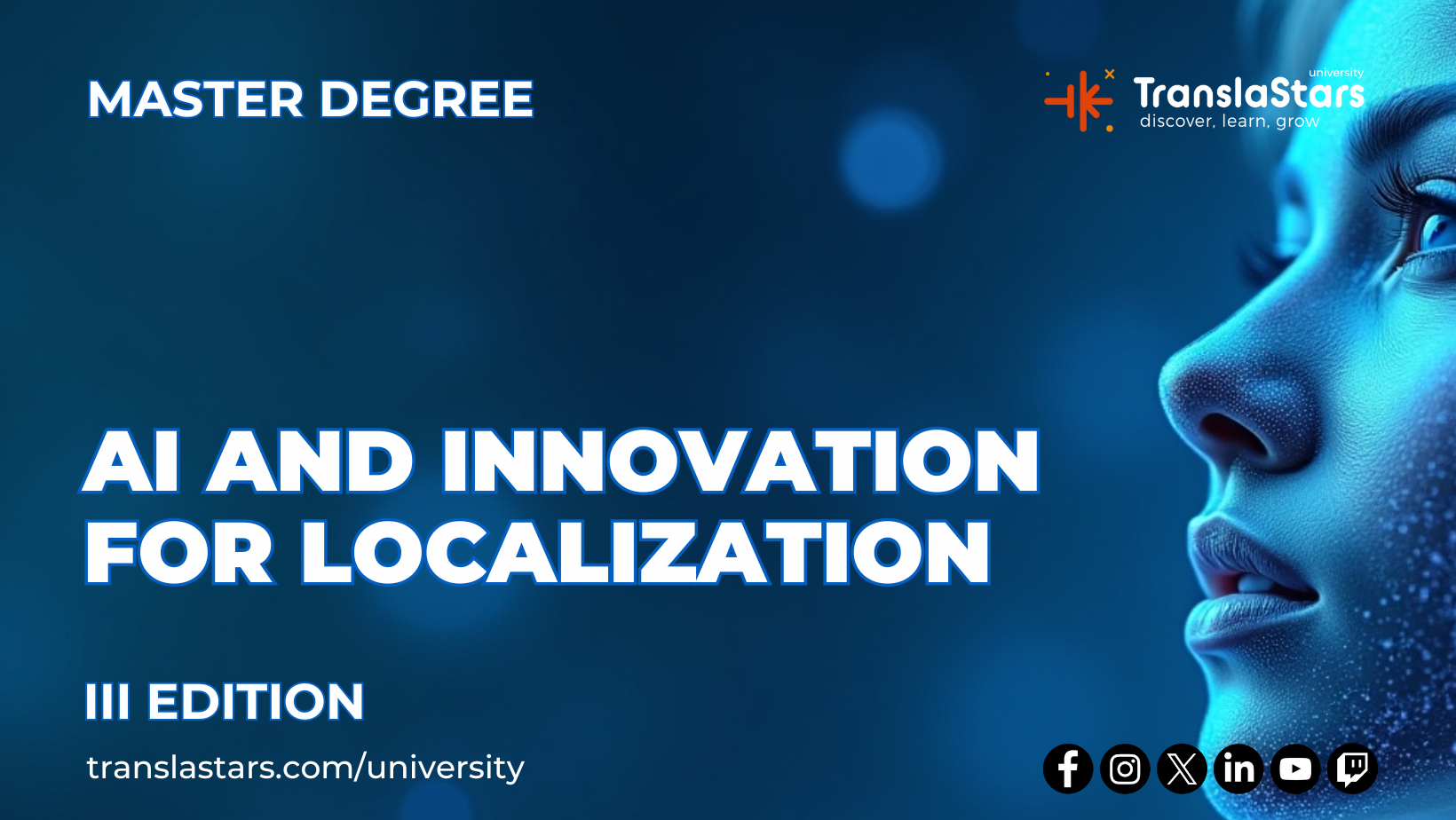
For language professionals who want to go even further, structured training can make a big difference. Programs like the Master in AI and Innovation for Localization offer targeted education on AI fundamentals, machine learning, NLP, and real‑world applications of AI in localization, helping linguists stay ahead of industry trends and confidently integrate AI into their daily workflows.
By combining human expertise with AI‑powered tools and continuous learning, language professionals can stay competitive and deliver exceptional results in 2026 and beyond.
If you liked this article, read also:



Courses
Free Courses/Resources
LMA
TranslaStars University
Media Library
Contact
Support / Help / Documentation
Data