
From short-form clips to full-length productions, audiovisual content has become the way we consume information, tell stories, and connect with audiences around the world.
But here’s the catch: global reach doesn’t happen automatically. If your content isn’t understood, it simply doesn’t travel. That’s where audiovisual translation steps in.
It’s not just about subtitles or dubbing, but rather making content feel local, relevant, and accessible no matter where your audience is. In a world where attention spans are short and competition is global, that can make all the difference.
In this article, we’re diving into 5+ reasons why audiovisual translation is no longer optional, but essential in today’s digital landscape.
To make things even more insightful, we’ve also included tips and perspectives from industry experts who work with this reality every day.
A big thank you to Maria Virgínia Barros and Guadalupe Azanza, who contributed to this piece: your insights bring depth, clarity, and real-world perspective to the topic.
It is time to stop thinking "human-in-the-loop" and start thinking "AI-in-the-loop". In this new paradigm, the process remains fundamentally human.
AI enters not as a replacement, but as a powerful tool inside a workflow designed by people who deeply understand the craft.
Think about the last time you watched a foreign series on a streaming platform, followed a tutorial from a creator on the other side of the world, or attended an international webinar.
That experience wasn't created by a lone algorithm of a "translate" button. It was made possible by a skilled audiovisual translator working behind the scenes.
In a world where content crosses borders in seconds, Audiovisual Translation has moved from a niche specialty to a strategic necessity.
1. Video
Rules the World
Publishing a video in one language without translation is not reaching… It's exclusion. AVT professionals solve that problem at scale, for every language, every platform, every audience.
One of the most common mistakes when working with AI is trying to design the “perfect” prompt from the start. Overly complex prompts can become difficult to manage, contradictory, or time-consuming to refine.
In professional translation, effectiveness often comes from starting with a clear, simple instruction and gradually adding constraints only when they are truly needed.
3. Human Judgment Keeps Quality
Human Judgment Keeps Quality.
AI still struggles with:
- Cultural humor that doesn't translate literally
- Register shifts: sarcasm, tenderness, formality
- Lip-sync syllable precision in dubbing
- Reading speed timing in subtitling
- Domain-specific legal or medical terminology
4. A Real Career Opportunity
Demand for localized content has exploded. The supply of professionals who can combine AVT craft with AI literacy is still catching up with demand.
That gap is your opportunity.
Don't forget to take a look at the new localization job opportunities we share every week, in collaboration with The Language Talent Pool.

5. Poor Localization Damages Brands
These are not minor issues: they are measurable business risks. The benchmark is localization that feels native, not translated.
That means adapting humor, cultural references, and tone, not just swapping words. Well-localized content builds a genuine emotional connection. That translates directly to retention and revenue.
6. Knowledge Is What Makes AI Usable
The skills that matter most:
- Segmentation
- Natural dialogue construction
- Narrative time
- Reading Rhythm
- Cultural adaptation
We recommend subscribing to her newsletter, which serves as an invaluable resource for both students and professionals navigating the AVT sector.
7. Global by Default, Not Accessible by Default
Uploading a video to
YouTube or launching a course on an e-learning platform instantly gives it a
global reach. But reach is not the same as understanding.
A video in English is
invisible to the 75% of internet users who prefer to consume content in their
own language.
Subtitling, dubbing, and voice-over are what transform that reach
into real connection, turning a monolingual piece of content into something
that genuinely travels.
8. The Streaming-Driven AVT Boom
Platforms like
Netflix, Disney+, and Amazon Prime are producing original content in dozens of
languages and distributing it worldwide.
The result? An unprecedented demand
for high-quality subtitles and dubbing. The global subtitling and captioning
market is projected to grow significantly through the rest of this decade.
For
language professionals, this represents not just employment but a field with
genuine creative depth, where cultural nuance, timing, and voice-acting
direction all come into play.
Turn your AVT expertise into a sustainable career. The Professional Subtitling course by Maria Virgínia Barros connects technical skill with professional practice, teaching you not just how to create high-quality subtitles, but how to position yourself in today's competitive market.
9. The Shift to Mandatory Accessibility
AVT is not only about
translating between languages, but it is also about making content accessible to
people who are deaf, hard of hearing, or visually impaired.
Subtitles for the
deaf and hard of hearing (SDH) and audio description (AD) are now legal
requirements in many countries and increasingly expected by audiences
everywhere.
Translators who master these formats are not just language
professionals; they are advocates for inclusion in the digital space.
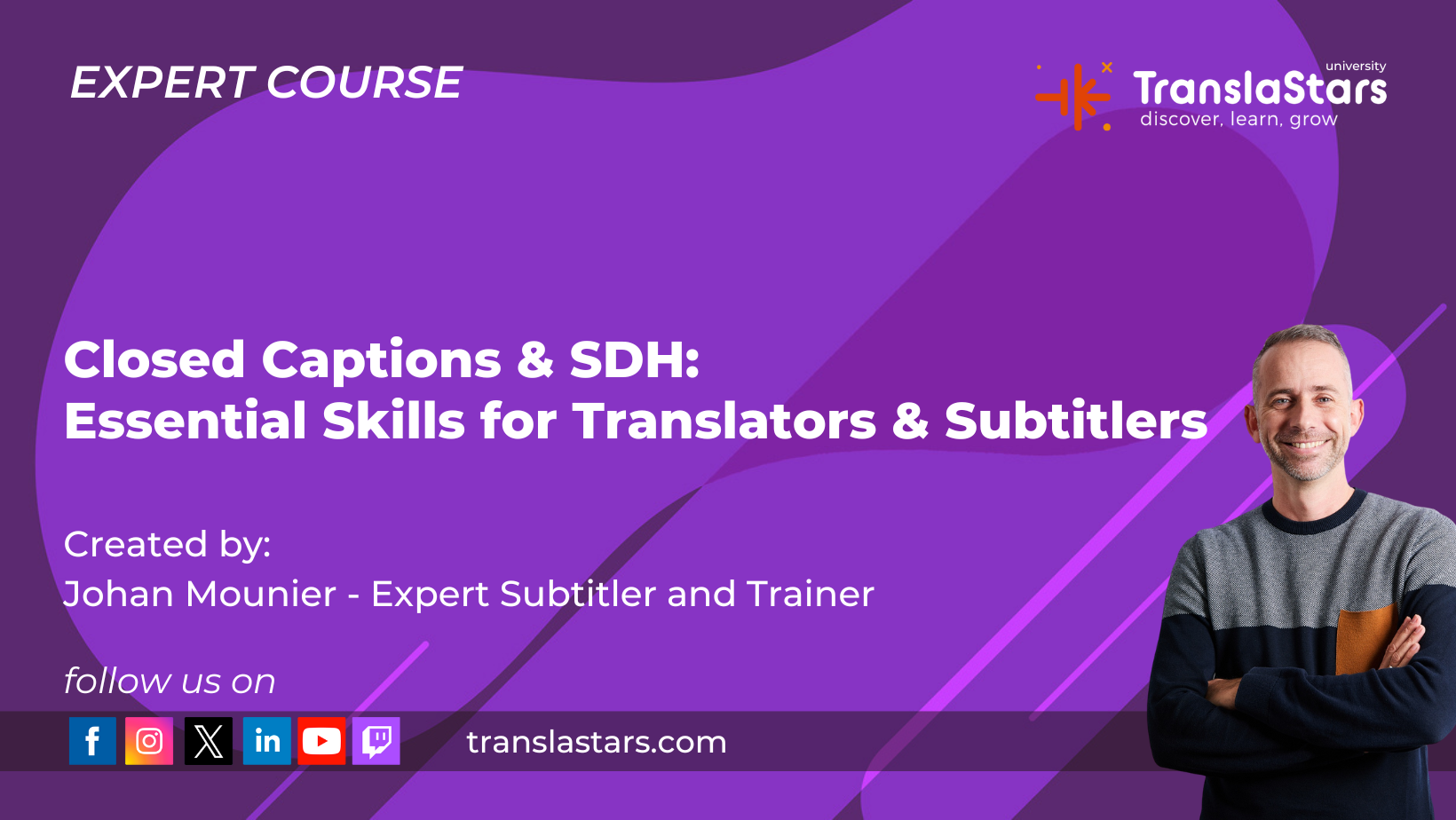
Understand what SDH really involves, learn how it differs from subtitling and closed captions, and discover what's needed to succeed in accessible, inclusive subtitling with Johan Mounier's course Closed Captions & SDH: Essential Skills for Translators & Subtitlers.
10. AI-Driven Role Evolution
Automatic Speech
Recognition (ASR), Neural Machine Translation (NMT), and AI dubbing tools have
entered the AVT workflow at speed.
This might sound like a threat, but it is
better understood as a shift. AI handles volume and speed; human translators
handle quality, cultural sensitivity, and editorial judgment.
The most valuable
professionals today are those who understand both sides, who can work with AI
tools critically, spot their limitations, and add what machines cannot:
context, creativity, and cultural intelligence.
This is precisely why academic
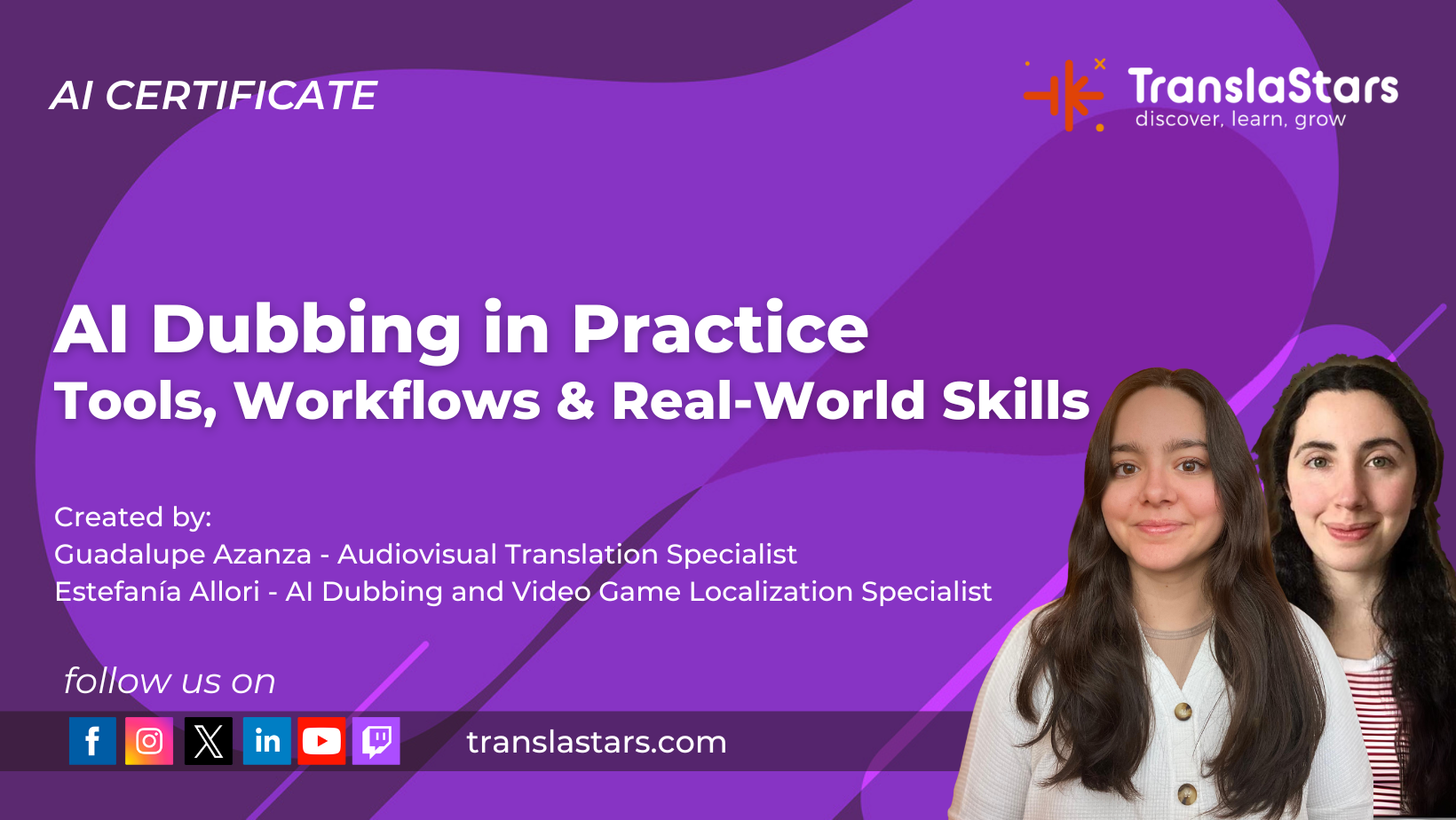
programs combining AI and AVT are becoming so relevant. One of them is without any doubt our AI Certificate, AI Dubbing in Practice: Tools, Workflows & Real-World Skills by Guadalupe Azanza, who is sharing her invaluable tips with us, and Estefanía Allori.
11. Impact Through Cultural Localization
A literal translation
of a joke is rarely funny. A direct dub of an idiom often sounds absurd. AVT is
not just a linguistic exercise; it is a cultural one.
Great audiovisual
translators are also cultural mediators, making decisions about what to adapt,
what to preserve, and how to carry the emotional intent of the original across
language barriers.
This is a skill that cannot be automated and that grows in
importance the more content companies want their productions to feel native to
international audiences, not just translated.
The Future of Connection is Audiovisual
And, as Raquel Espada states, "it fosters understanding, connection, and communication between different cultures".
For the modern linguist, AVT isn't just a niche. It’s the frontier. However, as technology evolves, staying relevant requires more than just linguistic fluency; it requires mastering the tools that are defining the next decade of media.
If you are ready to transition from a spectator to an architect of cross-cultural communication, the next step is specialized expertise.
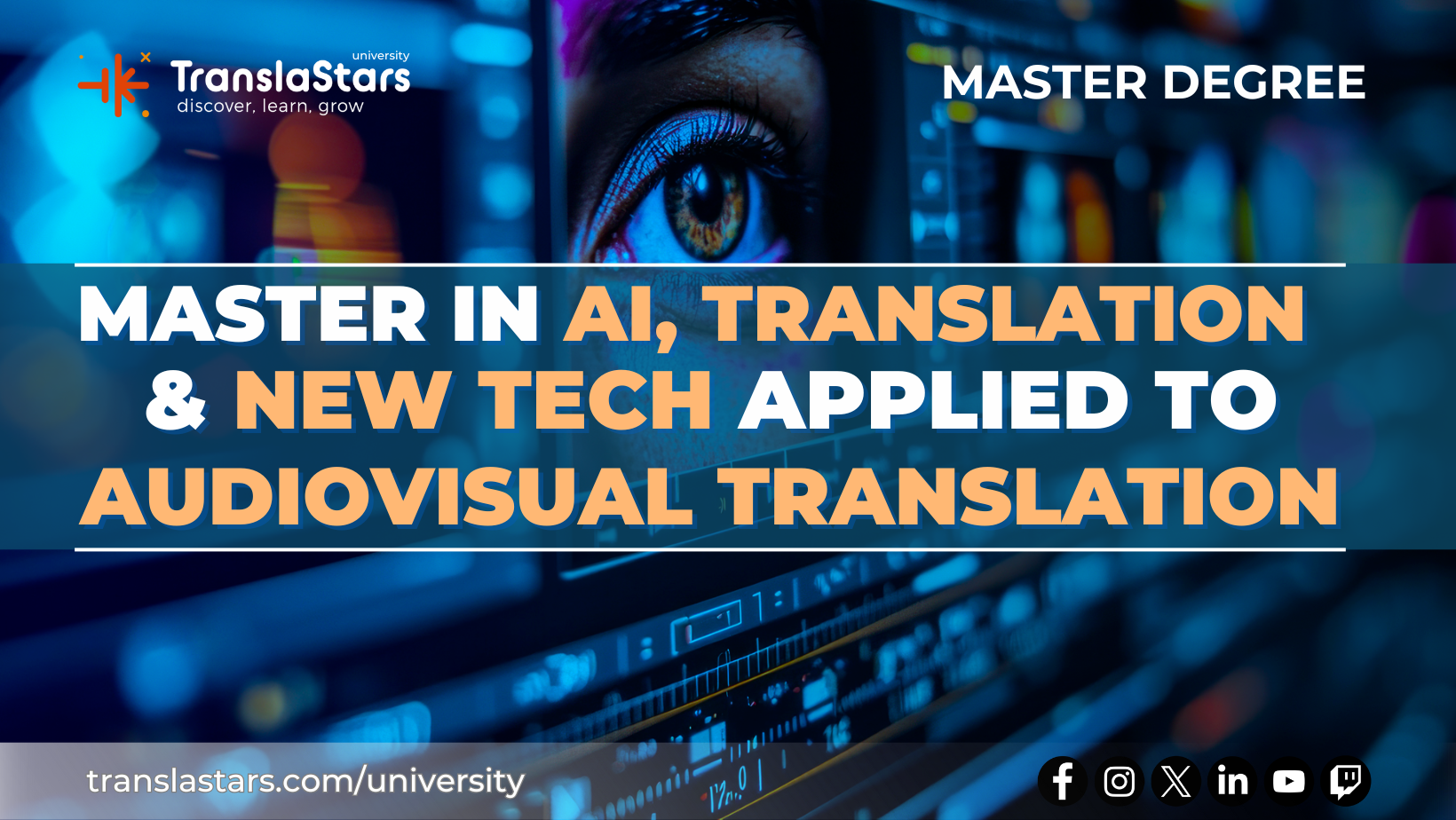
Our Master in AI, Translation and New Tech for Audiovisual Translation is designed to bridge the gap between traditional translation skills and the cutting-edge AI technologies transforming the industry.
Whether you want to master subtitling, dubbing, or the ethical integration of AI in your workflow, this program provides the professional toolkit needed to thrive in a video-first world.



Courses
Free Courses/Resources
LMA
TranslaStars University
Media Library
Contact
Support / Help / Documentation
Data