
Artificial intelligence has transformed localization workflows at a remarkable speed. Many companies have already integrated AI-powered translation and automation tools into their processes, achieving immediate gains in speed and productivity.
But after the initial improvements, many localization teams encounter the same challenge: performance plateaus. The issue is not necessarily the AI model itself. In many cases, the real bottleneck lies upstream: in the linguistic assets, workflows, and testing systems that support the model.
Without structured glossaries, market-specific tone guidelines, and continuous optimization, even the most advanced AI tools struggle to deliver consistent, scalable results.
To explore this topic in depth, we would like to thank Nicola Calabrese for sharing his expertise and insights on the operational realities of AI localization. His contribution highlights a critical shift happening across the industry: successful AI localization is no longer just about adopting better models, but about building smarter localization pipelines around them.
In this article, we will examine how organizations can move beyond basic machine translation and post-editing workflows to create AI localization pipelines designed for long-term performance, quality, and scalability.
But after the initial improvements, many localization teams encounter the same challenge: performance plateaus. The issue is not necessarily the AI model itself. In many cases, the real bottleneck lies upstream: in the linguistic assets, workflows, and testing systems that support the model.
Without structured glossaries, market-specific tone guidelines, and continuous optimization, even the most advanced AI tools struggle to deliver consistent, scalable results.
To explore this topic in depth, we would like to thank Nicola Calabrese for sharing his expertise and insights on the operational realities of AI localization. His contribution highlights a critical shift happening across the industry: successful AI localization is no longer just about adopting better models, but about building smarter localization pipelines around them.
In this article, we will examine how organizations can move beyond basic machine translation and post-editing workflows to create AI localization pipelines designed for long-term performance, quality, and scalability.
1. The Real Bottleneck in AI Localization Pipelines
When localization teams first adopt AI, the results can be impressive. Translation speed increases, turnaround times improve, and workflows become more scalable.
But after the initial gains, many organizations hit the same problem: performance plateaus. At that point, the instinct is often to look for a better model. However, as Nicola Calabrese explains, the real issue usually lies elsewhere:
“The bottleneck in an AI localization pipeline almost never sits inside the model. It sits in the linguistic assets feeding it.”
But after the initial gains, many organizations hit the same problem: performance plateaus. At that point, the instinct is often to look for a better model. However, as Nicola Calabrese explains, the real issue usually lies elsewhere:
“The bottleneck in an AI localization pipeline almost never sits inside the model. It sits in the linguistic assets feeding it.”
AI systems are only as effective as the instructions and context surrounding them. Many companies still rely on traditional workflows built around machine translation and post-editing, without improving the linguistic assets that guide the AI.
As a result, reviewers continue to correct the same terminology, style, and tone issues. This is why many teams fail to unlock the full potential of AI localization.
“Most teams are using about ten percent of what AI can actually do for localization. And the ten percent they use is the part that needs the least preparation.”
The organizations seeing long-term improvements are not just adopting new AI tools. They are building smarter localization pipelines around them, with structured glossaries, AI-ready style guides, market-specific tone instructions, and continuous testing systems that improve output quality over time.
As a result, reviewers continue to correct the same terminology, style, and tone issues. This is why many teams fail to unlock the full potential of AI localization.
“Most teams are using about ten percent of what AI can actually do for localization. And the ten percent they use is the part that needs the least preparation.”
The organizations seeing long-term improvements are not just adopting new AI tools. They are building smarter localization pipelines around them, with structured glossaries, AI-ready style guides, market-specific tone instructions, and continuous testing systems that improve output quality over time.
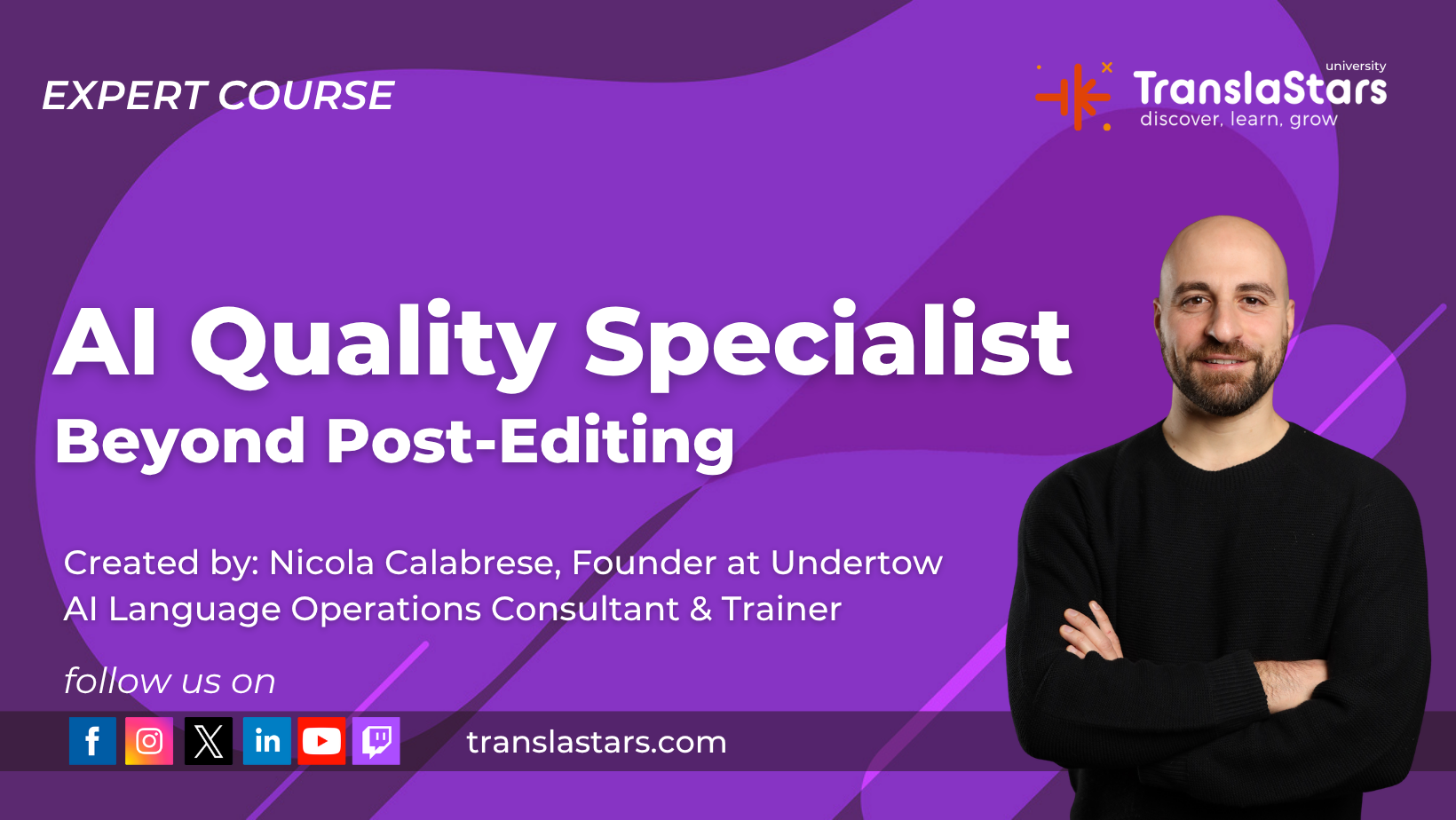
Learn what companies running AI-assisted localization actually need from linguists, how to spot and classify AI errors using a structured taxonomy, how to write quality reports that drive real improvements, and how to rewrite glossaries and style guides so AI actually follows them.
Enroll now in our expert course AI Quality Specialist: Beyond Post-Editing, hosted by Nicola Calabrese.
Enroll now in our expert course AI Quality Specialist: Beyond Post-Editing, hosted by Nicola Calabrese.
2. Why MT + Post-Editing Is No Longer Enough
For years, machine translation combined with human post-editing has been the standard approach to scalable localization.
While this workflow still offers clear efficiency benefits, it was designed for a different technological landscape, one where AI systems played a limited role in linguistic decision-making. Today’s AI models can do much more than just generate raw translations.
They can adapt tone, follow terminology rules, apply stylistic guidance, and produce market-specific content variations. However, many localization workflows still use AI in the most basic way possible: generate content first, fix errors later.
The problem with this approach is that it creates a reactive process rather than an improved system. Linguists and reviewers repeatedly correct the same issues, but those corrections rarely feed back into the pipeline in a structured way.
Over time, productivity gains flatten while post-editing workloads remain high. To move beyond this cycle, companies need to rethink the role of linguistic assets within the localization process.
Instead of treating glossaries and style guides as static reference documents for human translators, they must become operational tools designed to guide AI behavior directly. This shift is what separates basic AI adoption from a truly optimized AI localization pipeline.
While this workflow still offers clear efficiency benefits, it was designed for a different technological landscape, one where AI systems played a limited role in linguistic decision-making. Today’s AI models can do much more than just generate raw translations.
They can adapt tone, follow terminology rules, apply stylistic guidance, and produce market-specific content variations. However, many localization workflows still use AI in the most basic way possible: generate content first, fix errors later.
The problem with this approach is that it creates a reactive process rather than an improved system. Linguists and reviewers repeatedly correct the same issues, but those corrections rarely feed back into the pipeline in a structured way.
Over time, productivity gains flatten while post-editing workloads remain high. To move beyond this cycle, companies need to rethink the role of linguistic assets within the localization process.
Instead of treating glossaries and style guides as static reference documents for human translators, they must become operational tools designed to guide AI behavior directly. This shift is what separates basic AI adoption from a truly optimized AI localization pipeline.
The course Prompt Engineering, Evaluation, & Refinement, available on-demand and hosted by Andrés Romero Arcas, gives you the practical skills to build structured prompt design for real localization tasks, systematic evaluation and refinement of LLM output, practical evaluation pipelines and quality metrics, and workflows that balance automation with control.

3. Build Smarter Linguistic Assets for AI Localization
One of the biggest differences between a traditional localization workflow and an optimized AI localization pipeline is the quality of the linguistic assets supporting the system.
In many organizations, glossaries and style guides were created for human translators.
They function as reference materials: useful for consultation, but often too vague, abstract, or incomplete for AI systems to follow consistently. AI models, however, perform best when instructions are explicit, contextual, and structured.
The more clearly the desired terminology, tone, and stylistic behavior are defined, the more reliable and scalable the output becomes. This is why successful AI localization pipelines rely on linguistic assets designed specifically for machine readability and continuous optimization, not just human interpretation.
They function as reference materials: useful for consultation, but often too vague, abstract, or incomplete for AI systems to follow consistently. AI models, however, perform best when instructions are explicit, contextual, and structured.
The more clearly the desired terminology, tone, and stylistic behavior are defined, the more reliable and scalable the output becomes. This is why successful AI localization pipelines rely on linguistic assets designed specifically for machine readability and continuous optimization, not just human interpretation.
4. Add Structured Testing to Your Localization Workflow
Even the best linguistic assets cannot improve performance on their own without continuous testing and evaluation. One of the most common weaknesses in AI localization workflows is the lack of a structured feedback loop.
Many teams deploy new prompts, glossaries, or style guidelines without measuring their actual impact on output quality. As a result, localization becomes reactive: errors are corrected manually, but the system itself does not evolve.
A stronger AI localization pipeline requires ongoing testing and optimization. This starts with establishing a clear quality baseline before deployment, followed by regular sampling and performance monitoring across languages and content types.
Small changes to linguistic assets should also be tested systematically. A/B testing different glossary rules, tone instructions, or stylistic constraints can reveal which adjustments produce more accurate and consistent results.
Over time, this approach transforms localization from a static workflow into a continuously improving system: one where quality gains compound instead of plateauing.
Many teams deploy new prompts, glossaries, or style guidelines without measuring their actual impact on output quality. As a result, localization becomes reactive: errors are corrected manually, but the system itself does not evolve.
A stronger AI localization pipeline requires ongoing testing and optimization. This starts with establishing a clear quality baseline before deployment, followed by regular sampling and performance monitoring across languages and content types.
Small changes to linguistic assets should also be tested systematically. A/B testing different glossary rules, tone instructions, or stylistic constraints can reveal which adjustments produce more accurate and consistent results.
Over time, this approach transforms localization from a static workflow into a continuously improving system: one where quality gains compound instead of plateauing.
The difference between teams experimenting with AI and those actually benefiting from it comes down to one thing: structure.
Recently, we shared expert insights from Jourik Ciesielski, highlighting a reality many language professionals are still missing.
Recently, we shared expert insights from Jourik Ciesielski, highlighting a reality many language professionals are still missing.
5. The Roles Behind a Successful AI Localization Pipeline
Technology alone is not enough to build an effective AI localization pipeline. Long-term success depends on having clear ownership, structured processes, and specialized expertise guiding the system over time.
As Nicola Calabrese points out, two roles are particularly important.
The first is the Localization Manager, who oversees the broader localization strategy, vendor relationships, workflows, SLAs, and overall business objectives. This role ensures that the localization program remains aligned with company goals and delivers measurable results.
The second is the Language Intelligence Specialist: a role becoming increasingly important in AI-driven localization environments. These specialists focus on the upstream quality work that directly impacts AI performance: maintaining glossaries, analyzing recurring error patterns, refining linguistic assets, and testing workflow improvements.
Without continuous optimization, AI quality can gradually drift over time. But without strategic ownership, even the most advanced localization systems struggle to deliver sustainable business value.
As Calabrese summarizes:
“The model is the engine. The linguistic assets are the fuel. The Localization Manager is the driver. The Language Intelligence Specialists are the navigators.”
The first is the Localization Manager, who oversees the broader localization strategy, vendor relationships, workflows, SLAs, and overall business objectives. This role ensures that the localization program remains aligned with company goals and delivers measurable results.
The second is the Language Intelligence Specialist: a role becoming increasingly important in AI-driven localization environments. These specialists focus on the upstream quality work that directly impacts AI performance: maintaining glossaries, analyzing recurring error patterns, refining linguistic assets, and testing workflow improvements.
Without continuous optimization, AI quality can gradually drift over time. But without strategic ownership, even the most advanced localization systems struggle to deliver sustainable business value.
As Calabrese summarizes:
“The model is the engine. The linguistic assets are the fuel. The Localization Manager is the driver. The Language Intelligence Specialists are the navigators.”
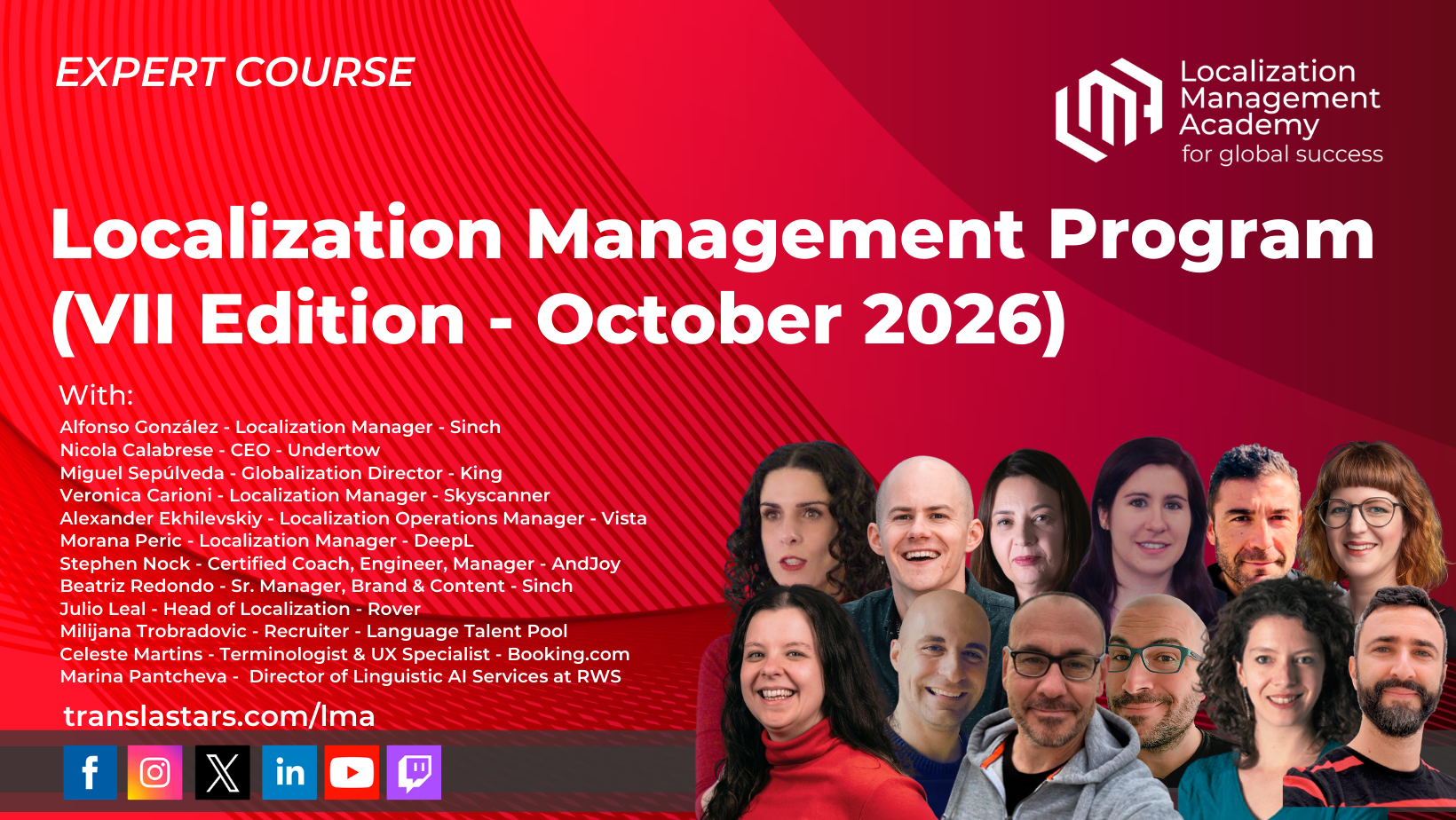
Become a Localization Leader. Learn strategic skills to lead global initiatives and manage multilingual content guided by localization experts in the VII Edition of our Localization Management Program.
6. From Translation Workflow to Continuous Localization Optimization
AI is changing localization from a linear production process into a system of continuous optimization.
Traditional workflows were largely built around delivery: translate content, review it, publish it, and move on to the next project.
But AI localization pipelines require a more dynamic approach, where linguistic assets, workflows, and quality controls are constantly refined based on performance data and recurring patterns.
This shift changes the role of localization itself. Instead of focusing only on output correction, teams can proactively improve the system generating that output.
Glossaries become smarter, style guides become more actionable, and AI behavior becomes more consistent across languages and markets. The result is not just faster translation, but a localization pipeline capable of scaling quality over time.
Organizations that embrace this mindset will be better positioned to reduce post-editing effort, improve multilingual consistency, and fully unlock the long-term potential of AI-driven localization.
But AI localization pipelines require a more dynamic approach, where linguistic assets, workflows, and quality controls are constantly refined based on performance data and recurring patterns.
This shift changes the role of localization itself. Instead of focusing only on output correction, teams can proactively improve the system generating that output.
Glossaries become smarter, style guides become more actionable, and AI behavior becomes more consistent across languages and markets. The result is not just faster translation, but a localization pipeline capable of scaling quality over time.
Organizations that embrace this mindset will be better positioned to reduce post-editing effort, improve multilingual consistency, and fully unlock the long-term potential of AI-driven localization.
Conclusion
AI has already reshaped localization by making it faster, more scalable, and more accessible. But speed alone is not where long-term value lies. The real advantage comes from building systems that improve continuously rather than plateau after initial gains.
Most localization performance issues do not originate from the AI model itself, but from what surrounds it: incomplete linguistic assets, static guidelines, and the absence of structured feedback loops.
When these elements are treated as fixed reference materials instead of evolving system components, output quality eventually stagnates. The organizations that move beyond this limitation are the ones that redesign localization as an ongoing optimization process.
Glossaries become instruction systems rather than term lists, style guides become operational tools rather than abstract descriptions, and testing becomes a permanent part of the workflow instead of a final validation step.
When this shift happens, localization stops being a linear process of production and correction. It becomes a compounding system, one that improves in accuracy, consistency, and efficiency with every iteration.
Most localization performance issues do not originate from the AI model itself, but from what surrounds it: incomplete linguistic assets, static guidelines, and the absence of structured feedback loops.
When these elements are treated as fixed reference materials instead of evolving system components, output quality eventually stagnates. The organizations that move beyond this limitation are the ones that redesign localization as an ongoing optimization process.
Glossaries become instruction systems rather than term lists, style guides become operational tools rather than abstract descriptions, and testing becomes a permanent part of the workflow instead of a final validation step.
When this shift happens, localization stops being a linear process of production and correction. It becomes a compounding system, one that improves in accuracy, consistency, and efficiency with every iteration.




Courses
Free Courses/Resources
LMA
TranslaStars University
Media Library
Contact
Support / Help / Documentation
Data