
AI is no longer something companies experiment with on the side, but it's becoming part of how work gets done every day. In the language industry and beyond, organizations are integrating AI into their operations to manage content at scale, streamline multilingual communication, and support faster, more informed decision-making.
The shift is not just about adopting new tools, but about solving real challenges: handling increasing volumes of global content, maintaining quality across languages and markets, and simplifying complex workflows.
In this context, AI is most effective not as a replacement for human expertise but as a system that enhances it, helping professionals focus on accuracy, cultural nuance, and strategic oversight.
At TranslaStars, we see this transformation reflected in how language professionals and companies are adapting to AI-powered workflows. Through our courses and resources, we support the development of practical skills that turn AI into a reliable part of everyday work.
This article brings together insights from industry experts, Almira Zainutdinova, Monica Albini, Ekaterina Chashnikova, and Miguel Sepúlveda, who share how AI is being applied in real business contexts.
Their perspectives highlight a common thread: the value of AI lies not in experimentation, but in its practical, day-to-day use.
The shift is not just about adopting new tools, but about solving real challenges: handling increasing volumes of global content, maintaining quality across languages and markets, and simplifying complex workflows.
In this context, AI is most effective not as a replacement for human expertise but as a system that enhances it, helping professionals focus on accuracy, cultural nuance, and strategic oversight.
At TranslaStars, we see this transformation reflected in how language professionals and companies are adapting to AI-powered workflows. Through our courses and resources, we support the development of practical skills that turn AI into a reliable part of everyday work.
This article brings together insights from industry experts, Almira Zainutdinova, Monica Albini, Ekaterina Chashnikova, and Miguel Sepúlveda, who share how AI is being applied in real business contexts.
Their perspectives highlight a common thread: the value of AI lies not in experimentation, but in its practical, day-to-day use.
1. Scaling Content and Communication with AI
As content demands grow, the biggest challenge for language companies is no longer creation: it’s scale.
Managing high volumes of multilingual content while maintaining quality, consistency, and speed requires a different approach. AI is becoming a core part of that solution.
Today, companies are integrating AI directly into their content pipelines and communication workflows. From drafting and adapting content to coordinating complex projects, AI helps teams move faster and operate more efficiently, without losing control over quality.
At the same time, this shift is redefining the role of language professionals. The focus is moving away from pure execution and toward validation, strategy, and oversight.
Managing high volumes of multilingual content while maintaining quality, consistency, and speed requires a different approach. AI is becoming a core part of that solution.
Today, companies are integrating AI directly into their content pipelines and communication workflows. From drafting and adapting content to coordinating complex projects, AI helps teams move faster and operate more efficiently, without losing control over quality.
At the same time, this shift is redefining the role of language professionals. The focus is moving away from pure execution and toward validation, strategy, and oversight.
Speaking of how the role is changing, getting found in this wide range of AI data is harder than ever.
Ranking on Google does not guarantee visibility in AI-generated answers.
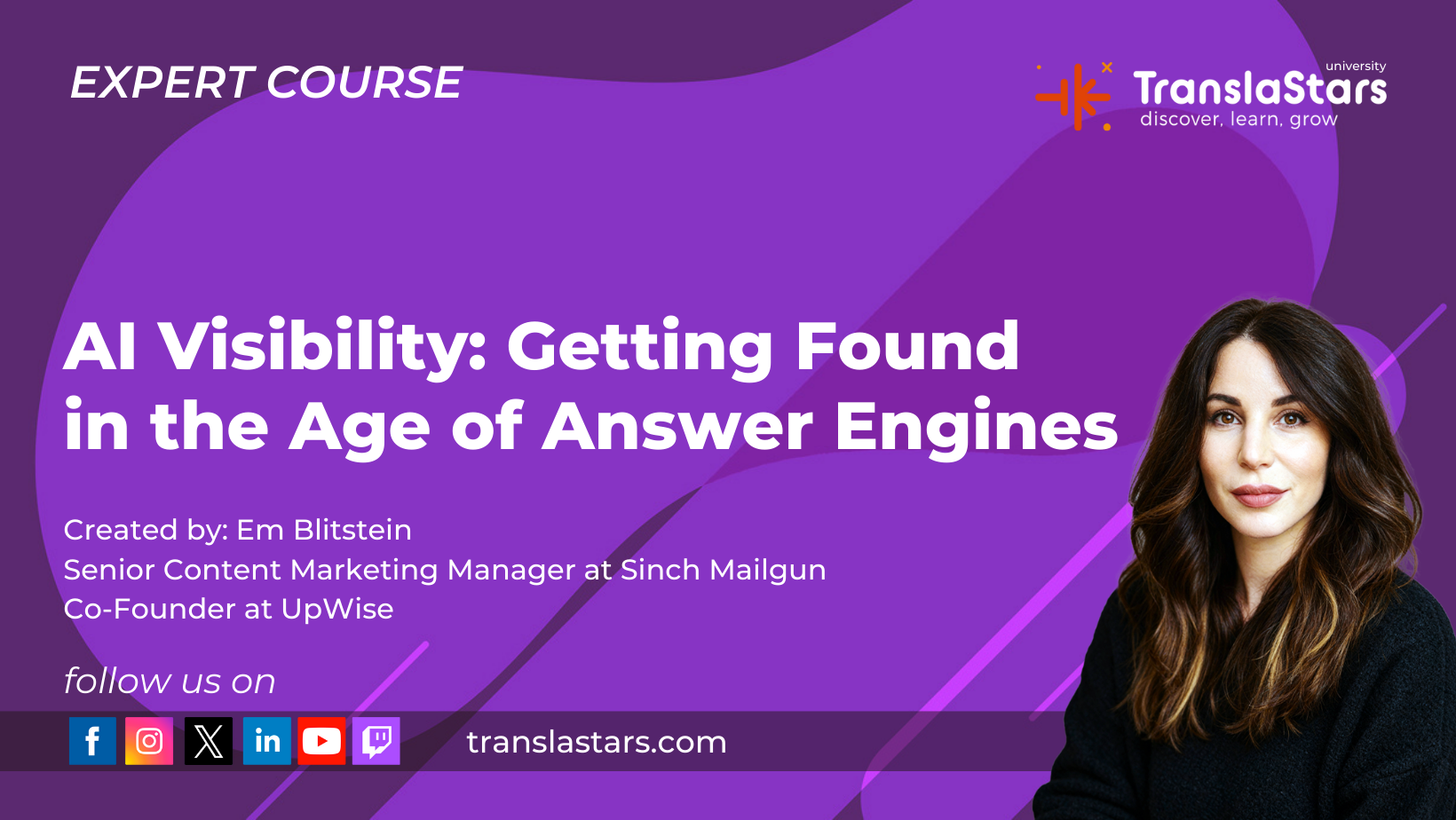
Enroll in our course AI Visibility: Getting Found in the Age of Answer Engines, designed by Em Blitstein, who will teach you how to audit, optimize, and measure your brand's visibility across AI answer engines
Ranking on Google does not guarantee visibility in AI-generated answers.
Enroll in our course AI Visibility: Getting Found in the Age of Answer Engines, designed by Em Blitstein, who will teach you how to audit, optimize, and measure your brand's visibility across AI answer engines
Key Highlights
- AI enables content creation and adaptation at scale across multiple languages
- Teams can reduce turnaround times while maintaining consistency
- Project and workflow management become more efficient and less fragmented
- Language professionals shift toward quality control, cultural accuracy, and decision-making
- AI supports speed, but human expertise ensures relevance and trust
2. AI in Marketing, Social Media, and Training
AI is making content production faster and more accessible than ever. Tasks that once required multiple tools or entire teams can now be handled within a single, streamlined workflow.
For language professionals and global teams, this means more content, across more formats and channels, with significantly less friction.
At the same time, the role of human expertise becomes even more important in guiding quality, tone, and relevance.
For language professionals and global teams, this means more content, across more formats and channels, with significantly less friction.
At the same time, the role of human expertise becomes even more important in guiding quality, tone, and relevance.
And, even if AI-enabled workflows have become core to multilingual content delivery, the quality gap is widening.
Professionals who understand this gap are stepping into quality specialist roles that did not exist two years ago.
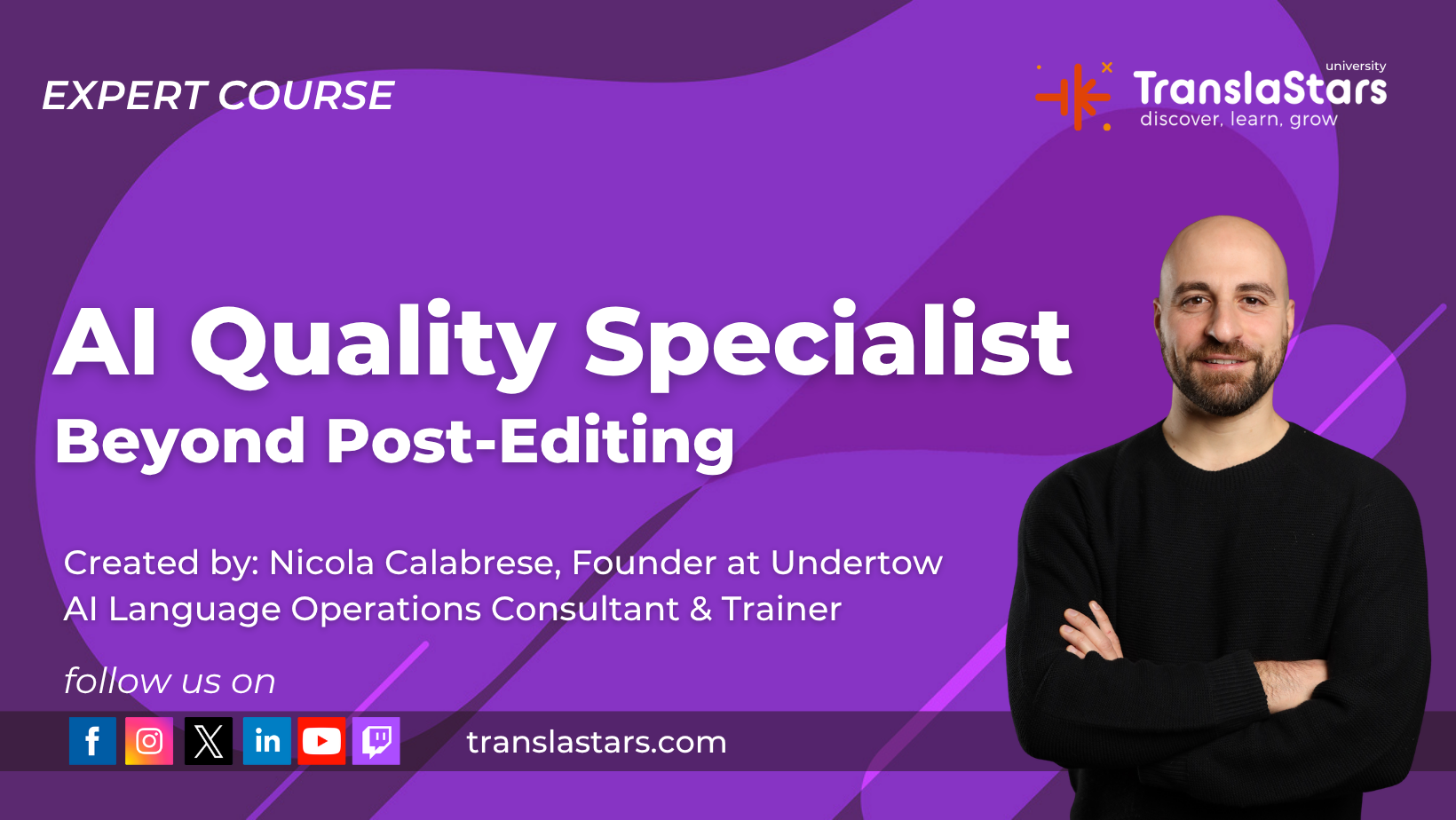
Join Nicola Calabrese's course, AI Quality Specialist, to learn how to spot and classify AI errors using a structured taxonomy, how to rewrite glossaries and style guides, and more.
Professionals who understand this gap are stepping into quality specialist roles that did not exist two years ago.
Join Nicola Calabrese's course, AI Quality Specialist, to learn how to spot and classify AI errors using a structured taxonomy, how to rewrite glossaries and style guides, and more.
Key Highlights
- AI enables end-to-end content workflows: idea → creation → publishing
- One person can manage multiple channels and content formats
- Businesses can target diverse audiences more effectively
- Training materials can be transformed into interactive learning experiences
- AI accelerates production, but human guidance ensures quality and relevance
3. From Monitoring to Prediction
In complex environments, reacting to problems is no longer enough. Companies are increasingly using AI to move from simple monitoring to continuous, data-driven prediction.
Instead of relying on fixed schedules or periodic checks, AI systems analyze large volumes of operational data in real time. This allows teams to detect early signs of issues, anticipate risks, and act before problems escalate.
For organizations working with multilingual content and global operations, the same principle applies. AI can help identify bottlenecks, flag inconsistencies, and improve workflows before they impact delivery or quality.
At its core, this shift is about better visibility and smarter decisions, not automation for its own sake.
Instead of relying on fixed schedules or periodic checks, AI systems analyze large volumes of operational data in real time. This allows teams to detect early signs of issues, anticipate risks, and act before problems escalate.
For organizations working with multilingual content and global operations, the same principle applies. AI can help identify bottlenecks, flag inconsistencies, and improve workflows before they impact delivery or quality.
At its core, this shift is about better visibility and smarter decisions, not automation for its own sake.
Establishing an organised and scalable localization strategy to reach a specific market with more potential is something that could set you apart.
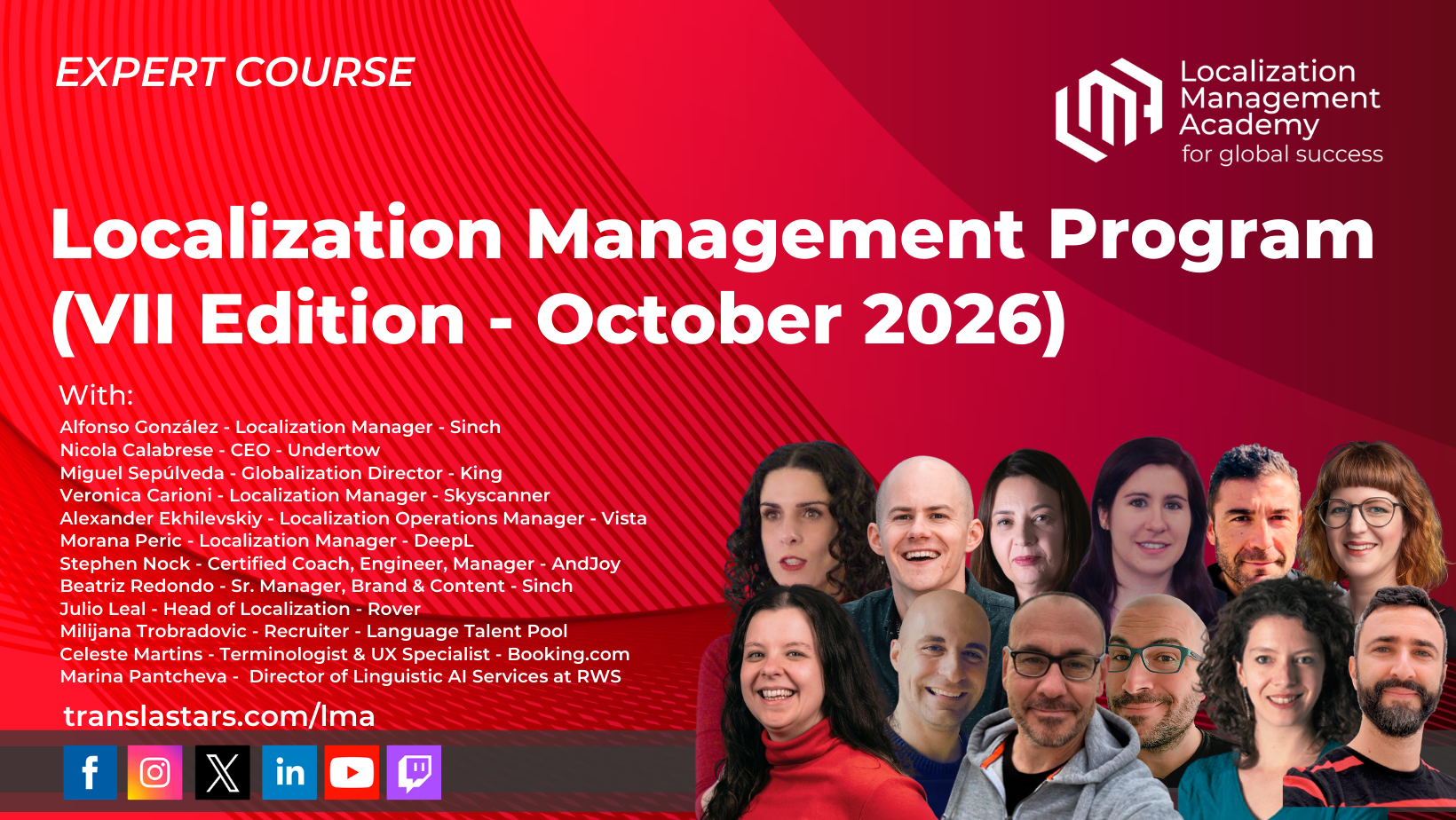
Learn to read and understand data and discover how the localization industry is structured. Get your seat for the VII Edition of our Localization Management Program, coming up in October 2026.
Learn to read and understand data and discover how the localization industry is structured. Get your seat for the VII Edition of our Localization Management Program, coming up in October 2026.
Key Highlights
- AI enables continuous monitoring instead of periodic checks
- Teams can detect issues earlier and reduce disruptions
- Data-driven insights support proactive decision-making
- Predictive systems improve efficiency, reliability, and planning
- AI enhances operations, while humans remain in control of decisions
4. From Tools to Real Business Impact
AI is often introduced as a new tool but its real value only appears when it changes how work is actually done.
In most cases, the starting point is a concrete problem: slow processes, repetitive tasks, or fragmented workflows. AI helps by simplifying these steps, reducing friction, and making operations more efficient.
The difference between limited and meaningful impact usually comes down to process. If nothing changes beyond the tool itself, results stay modest. When teams adjust workflows, responsibilities, and decision-making, AI starts to deliver clear improvements in speed, coordination, and focus. For language and content-driven organizations, this is particularly important.
The impact of AI is not only about producing more content, but about improving how it moves through the entire lifecycle, from creation and translation to review and delivery.
In most cases, the starting point is a concrete problem: slow processes, repetitive tasks, or fragmented workflows. AI helps by simplifying these steps, reducing friction, and making operations more efficient.
The difference between limited and meaningful impact usually comes down to process. If nothing changes beyond the tool itself, results stay modest. When teams adjust workflows, responsibilities, and decision-making, AI starts to deliver clear improvements in speed, coordination, and focus. For language and content-driven organizations, this is particularly important.
The impact of AI is not only about producing more content, but about improving how it moves through the entire lifecycle, from creation and translation to review and delivery.
Key Highlights
- AI creates value when it addresses a real operational need
- The strongest results come from improving processes, not just adding tools
- Meaningful impact requires adjustments in workflows and responsibilities
- Benefits are seen in efficiency, coordination, and decision speed
- In language work, AI improves the end-to-end content flow
5. AI as a Support System
Across all use cases, a consistent pattern emerges: AI is most effective when it supports human work, rather than replacing it. It handles structure, repetition, and scale, while people remain responsible for interpretation, judgment, and quality.
In language-intensive environments, this balance is especially important. AI can speed up workflows and surface useful information, but it is human expertise that ensures accuracy, cultural relevance, and meaningful communication across audiences.
The result is not a reduction in human involvement, but a shift toward more focused, higher-value work, where professionals spend less time on routine tasks and more on decisions that require context and expertise.
In language-intensive environments, this balance is especially important. AI can speed up workflows and surface useful information, but it is human expertise that ensures accuracy, cultural relevance, and meaningful communication across audiences.
The result is not a reduction in human involvement, but a shift toward more focused, higher-value work, where professionals spend less time on routine tasks and more on decisions that require context and expertise.
6. Start Small, Scale What Works
AI doesn’t need to start with transformation at scale. In most companies, the most effective approach is incremental: begin with a clear, well-defined use case and build from there.
The key is to focus on real problems, not on the technology itself. When AI is applied to a specific bottleneck or repetitive task, its value becomes easier to measure and refine.
Once results are clear, successful applications can be expanded across teams, workflows, or content processes. This step-by-step approach also reduces risk. It allows organizations to test, adapt, and integrate AI into existing systems without disrupting what already works.
Over time, small improvements compound into meaningful operational change. For language and content-driven teams, this often starts with simple areas like content adaptation, terminology consistency, or workflow support, and gradually expands into broader automation and optimization.
The key is to focus on real problems, not on the technology itself. When AI is applied to a specific bottleneck or repetitive task, its value becomes easier to measure and refine.
Once results are clear, successful applications can be expanded across teams, workflows, or content processes. This step-by-step approach also reduces risk. It allows organizations to test, adapt, and integrate AI into existing systems without disrupting what already works.
Over time, small improvements compound into meaningful operational change. For language and content-driven teams, this often starts with simple areas like content adaptation, terminology consistency, or workflow support, and gradually expands into broader automation and optimization.
At TranslaStars, we see AI not as a trend, but as a practical shift in how language and content work is done every day. From content creation and localization to workflow optimization and decision support, the real value of AI comes from applying it with clarity, structure, and purpose.
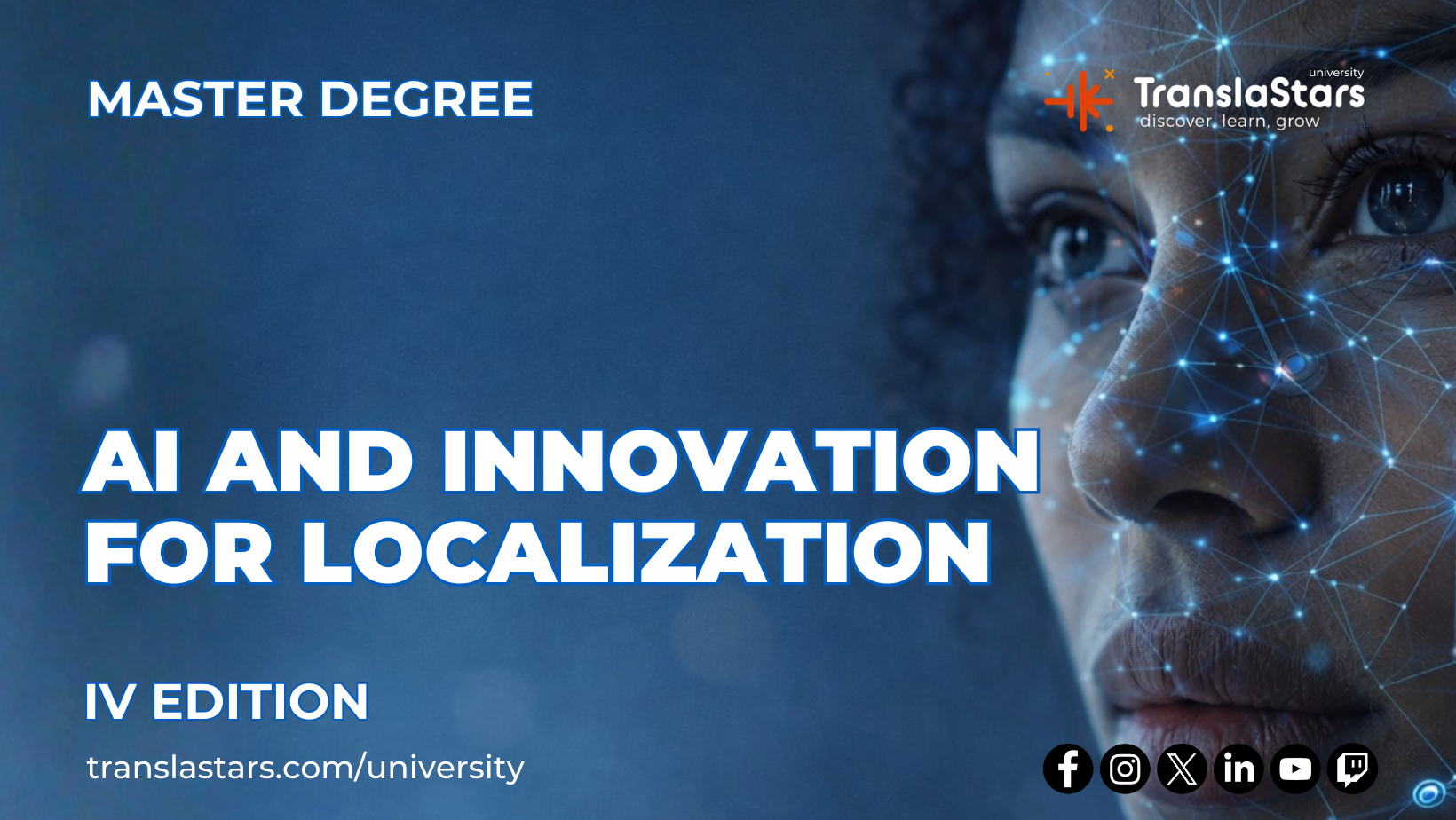
That’s exactly the focus of our Master in AI and Innovation for Localization: a program designed to help language professionals and companies turn AI into real, usable skills and integrate it effectively into their workflows.
Ready to take your career to new heights? Enroll now and open a world of opportunities in AI, innovation and localization.
That’s exactly the focus of our Master in AI and Innovation for Localization: a program designed to help language professionals and companies turn AI into real, usable skills and integrate it effectively into their workflows.
Ready to take your career to new heights? Enroll now and open a world of opportunities in AI, innovation and localization.




Courses
Free Courses/Resources
LMA
TranslaStars University
Media Library
Contact
Support / Help / Documentation
Data