
As healthcare, biotechnology, and medical innovation continue to expand globally, the demand for accurate and compliant multilingual communication has never been higher.
Life sciences localization plays a crucial role in ensuring that medical information, clinical data, and patient-facing materials can be safely and effectively used across languages and markets.
For language professionals, this specialization offers both meaningful impact and long-term career opportunities. However, it is also a field that sets particularly high standards.
Entering life sciences localization requires more than excellent linguistic skills. It demands preparation, specialization, and a clear understanding of industry expectations.
In this new article, we will discuss the core skills, resources, and pro tips provided by our Life Science experts, Ekaterina Chasnikova, Francesco Saina, and Elisa Manzanal Merino. Let’s dive deep into life science localization.
Life sciences localization plays a crucial role in ensuring that medical information, clinical data, and patient-facing materials can be safely and effectively used across languages and markets.
For language professionals, this specialization offers both meaningful impact and long-term career opportunities. However, it is also a field that sets particularly high standards.
Entering life sciences localization requires more than excellent linguistic skills. It demands preparation, specialization, and a clear understanding of industry expectations.
In this new article, we will discuss the core skills, resources, and pro tips provided by our Life Science experts, Ekaterina Chasnikova, Francesco Saina, and Elisa Manzanal Merino. Let’s dive deep into life science localization.
1. What is Life Sciences Localization
Life sciences localization encompasses the translation and adaptation of content related to pharmaceuticals, medical devices, clinical research, biotechnology, and healthcare services.
Moreover, it operates in a highly regulated environment where accuracy, consistency, and compliance are essential.
Texts in this domain often sit at the intersection of multiple disciplines: medicine, science, regulation, economics, and intercultural communication. Errors or inconsistencies are not merely stylistic issues, but can also impact regulatory approval processes, clinical outcomes, and patient safety.
This makes life sciences localization one of the most demanding, but also one of the most professionally rewarding, specialization areas.
Moreover, it operates in a highly regulated environment where accuracy, consistency, and compliance are essential.
Texts in this domain often sit at the intersection of multiple disciplines: medicine, science, regulation, economics, and intercultural communication. Errors or inconsistencies are not merely stylistic issues, but can also impact regulatory approval processes, clinical outcomes, and patient safety.
This makes life sciences localization one of the most demanding, but also one of the most professionally rewarding, specialization areas.
At TranslaStars, we’re committed to helping language professionals develop their skills in this particular field and evolve in their careers.
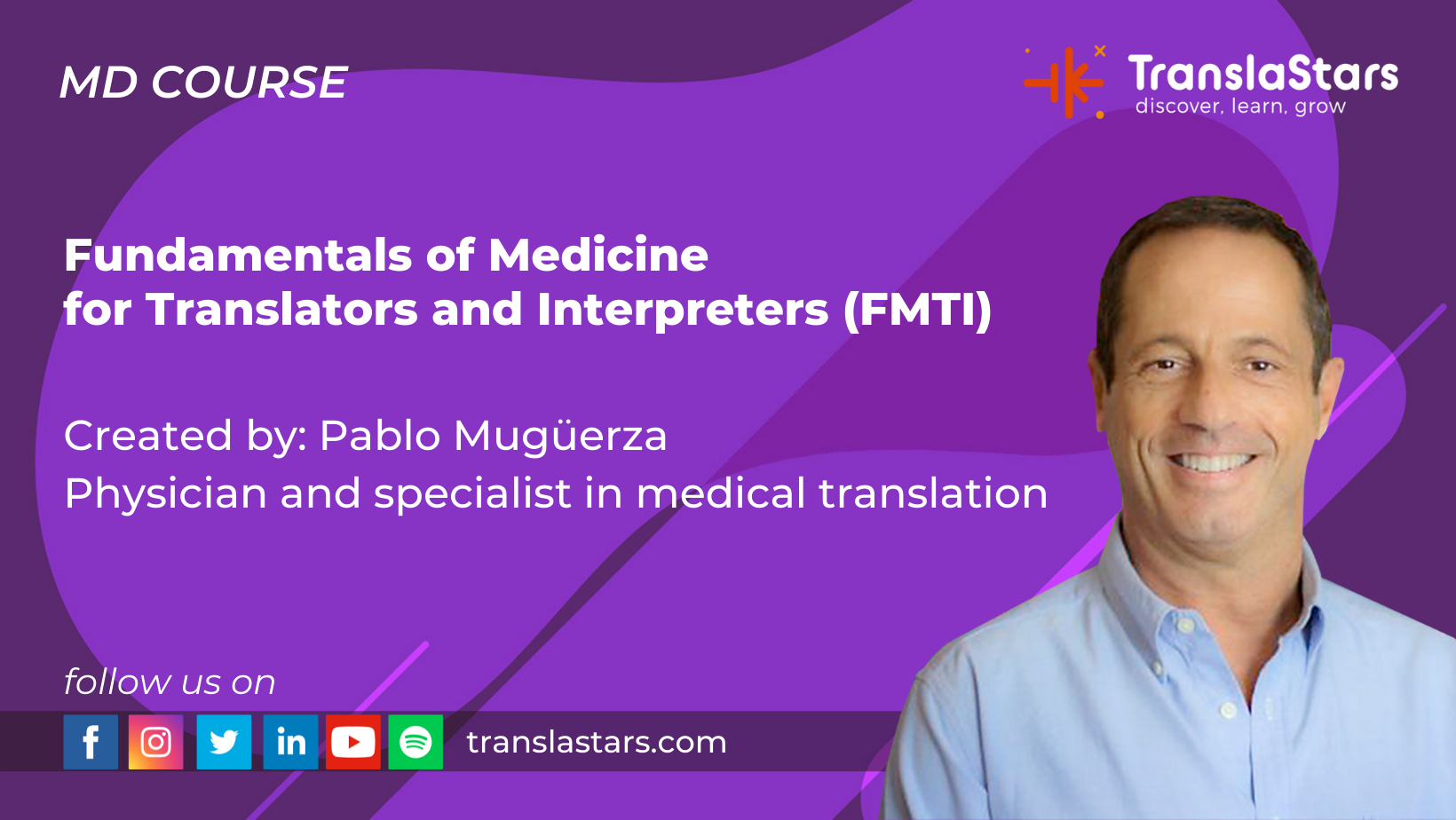
Not by chance, one of our best-selling on-demand courses is Fundamentals of Medicine for Translators and Interpreters (FMTI), hosted by Pablo Mugüerza, a doctor and experienced medical translator, where you will learn the anatomy and physiology of the corresponding apparatus or system, the main translation difficulties of each apparatus, and how to translate other medical words and concepts.
Not by chance, one of our best-selling on-demand courses is Fundamentals of Medicine for Translators and Interpreters (FMTI), hosted by Pablo Mugüerza, a doctor and experienced medical translator, where you will learn the anatomy and physiology of the corresponding apparatus or system, the main translation difficulties of each apparatus, and how to translate other medical words and concepts.
2. Terminology, Documentation, and Reliable References by Elisa Manzanal Merino
Breaking into life sciences localization means moving beyond words and into the complex world of medicine and science. Language professionals working in this field must be prepared to handle highly specialized content, manage complex terminology, and adapt their writing to diverse audiences, all while meeting the highest standard of accuracy and reliability.
Elisa Manzanal Merino, experienced pharmaceutical translator and tutor, explains that “Because the field is so multidisciplinary, translators must navigate highly complex information with rigour and precision. [...] Thus, having an excellent grasp of our working languages is not sufficient; a solid grounding in medical and scientific knowledge is equally essential.”
Elisa Manzanal Merino, experienced pharmaceutical translator and tutor, explains that “Because the field is so multidisciplinary, translators must navigate highly complex information with rigour and precision. [...] Thus, having an excellent grasp of our working languages is not sufficient; a solid grounding in medical and scientific knowledge is equally essential.”
And, speaking of terminology, this is often one of the most time-consuming phases of the translation process, which is why thorough documentation is indispensable.
Consulting reliable reference sources and, when necessary, seeking clarification from subject-matter experts helps ensure that terminological choices are “well-grounded and coherent.” In the absence of client-provided glossaries, building dedicated terminology databases is a practical strategy to maintain both intra- and interdocument consistency.
Equally important is the ability to recognise the communicative context in which medical texts are produced. Life sciences content is written for highly diverse audiences—“healthcare professionals, clinical researchers, ethics committees, patients [and] caregivers”—each requiring a different level of technicality, tone, and structure.
Language professionals must therefore be able to move confidently between highly specialised texts aimed at scientific audiences and materials intended for non-specialist readers. In these cases, careful reflection is required to assess whether the chosen terminology and phrasing are appropriate for the “intended audience and communicative purpose.”
Consulting reliable reference sources and, when necessary, seeking clarification from subject-matter experts helps ensure that terminological choices are “well-grounded and coherent.” In the absence of client-provided glossaries, building dedicated terminology databases is a practical strategy to maintain both intra- and interdocument consistency.
Equally important is the ability to recognise the communicative context in which medical texts are produced. Life sciences content is written for highly diverse audiences—“healthcare professionals, clinical researchers, ethics committees, patients [and] caregivers”—each requiring a different level of technicality, tone, and structure.
Language professionals must therefore be able to move confidently between highly specialised texts aimed at scientific audiences and materials intended for non-specialist readers. In these cases, careful reflection is required to assess whether the chosen terminology and phrasing are appropriate for the “intended audience and communicative purpose.”
3. Core Skills Needed to Enter Life Sciences Localization
Professionals aiming to enter life sciences localization must develop a combination of linguistic, technical, and analytical skills.
As we’ve partially seen above, these include advanced translation and revision competence, strong terminology management practices, and familiarity with industry standards and quality requirements.
A basic understanding of regulatory frameworks and validated workflows is also essential, as is the ability to work methodically and document decisions.
As we’ve partially seen above, these include advanced translation and revision competence, strong terminology management practices, and familiarity with industry standards and quality requirements.
A basic understanding of regulatory frameworks and validated workflows is also essential, as is the ability to work methodically and document decisions.
Equally important is a professional mindset grounded in precision, critical thinking, and responsibility. Given the complexity of life sciences content, dedicated training can greatly accelerate competence in these areas.
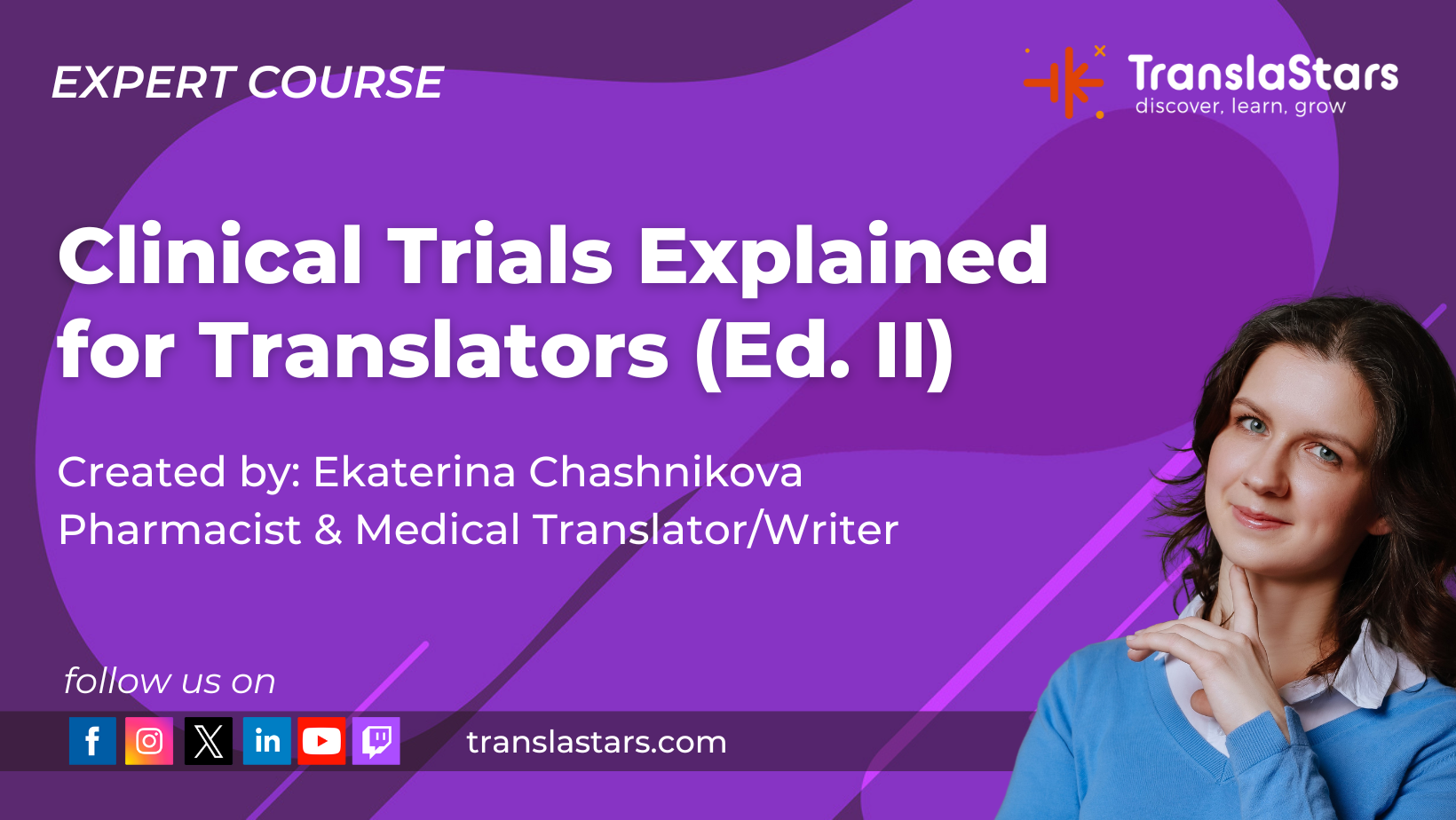
For example, TranslaStars’ Clinical Trials Explained for Translators (II Edition-2025) provides a focused introduction to clinical trial documentation, regulations, and terminology, helping professionals break into the clinical trials market, work with contract research organizations, and plan their continued professional development in this niche.
For example, TranslaStars’ Clinical Trials Explained for Translators (II Edition-2025) provides a focused introduction to clinical trial documentation, regulations, and terminology, helping professionals break into the clinical trials market, work with contract research organizations, and plan their continued professional development in this niche.
Life sciences is one of the most powerful drivers of growth and opportunity in the translation industry. Check our carousel “10 Reasons Why Life Sciences is a Job Generator for Translators” to find out the key trends in this field.
4. Market Realities, Technology, and Emerging Opportunities by Ekaterina Chashnikova
The life sciences localization market is evolving, but certain fundamentals remain critical for success. Language professionals need to understand where stability meets emerging opportunities, how technology shapes workflows, and which niches are growing.
Ekaterina Chashnikova, director of our Master in AI, Translation and Project Management for Life Sciences program, shared with us the following observations that capture both the enduring requirements and the exciting new prospects within this field:
Ekaterina Chashnikova, director of our Master in AI, Translation and Project Management for Life Sciences program, shared with us the following observations that capture both the enduring requirements and the exciting new prospects within this field:
5. Why Continuous Education Is Essential in Life Sciences
New treatments, technologies, regulations, and standards are introduced regularly, directly affecting the content that needs to be localized, making the field evolve day by day. For this reason, continuous education is not optional, but an integral part of professional practice.
Ongoing learning may include reading specialized publications, following regulatory updates, refining technical skills, and staying informed about new tools and workflows.
Structured education plays a crucial role in supporting this process, helping professionals consolidate knowledge and apply it in real-world scenarios.
Ongoing learning may include reading specialized publications, following regulatory updates, refining technical skills, and staying informed about new tools and workflows.
Structured education plays a crucial role in supporting this process, helping professionals consolidate knowledge and apply it in real-world scenarios.
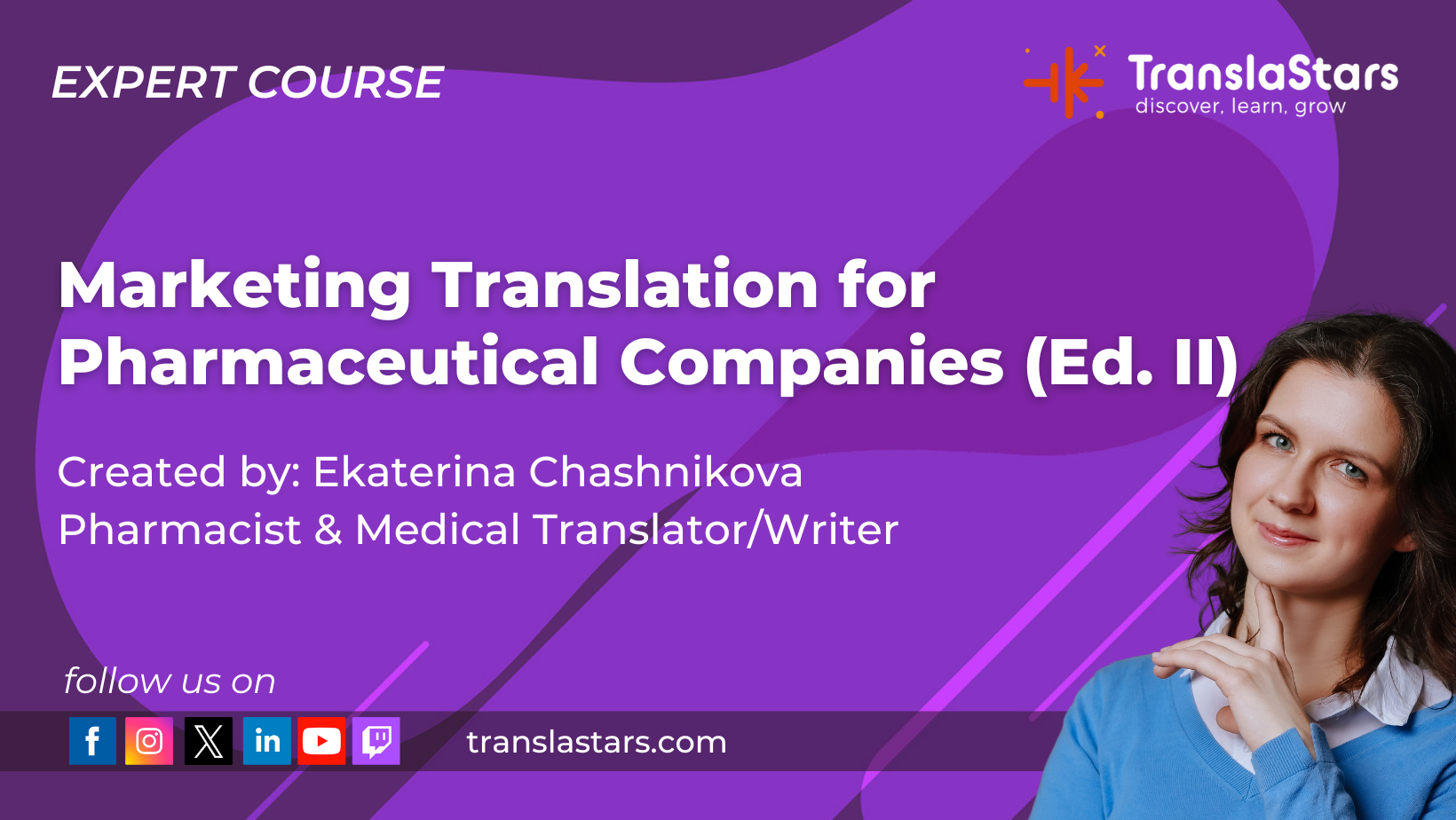
Our expert course Marketing Translations for the Pharmaceutical Companies (II Edition), for example, provides targeted training in regulatory-compliant marketing content, promotional materials, and sector-specific communication strategies. This course equips professionals with the knowledge and tools to adapt language effectively for different audiences, while maintaining compliance and accuracy.
Enroll now and learn more!
Enroll now and learn more!
6. Building a Sustainable Career Through Specialization and Networking by Francesco Saina
As we’ve seen above, in addition to medical and pharmaceutical knowledge, professionals must often engage with regulatory, economic-financial, and intercultural dimensions.
Professional growth is also strongly supported by networking, both within and beyond the language industry.
Participating in sector-specific events, engaging with professional associations, and connecting with colleagues active in life sciences can open valuable learning and career opportunities. In this context, specialized training programs play a key role in providing structured guidance, industry insight, and access to expert knowledge.
This is what Francesco Saina, University Lecturer and Researcher, states about this specific topic:
Professional growth is also strongly supported by networking, both within and beyond the language industry.
Participating in sector-specific events, engaging with professional associations, and connecting with colleagues active in life sciences can open valuable learning and career opportunities. In this context, specialized training programs play a key role in providing structured guidance, industry insight, and access to expert knowledge.
This is what Francesco Saina, University Lecturer and Researcher, states about this specific topic:
Conclusion
Life sciences localization is a demanding yet highly rewarding specialization. Success requires a combination of advanced linguistic skills, deep subject-matter knowledge, familiarity with regulatory standards, and the ability to navigate diverse audiences and text genres.
Continuous learning, engagement with emerging technologies, and awareness of evolving market opportunities are equally essential for building a sustainable career.
For language professionals ready to take their expertise to the next level, structured, specialized training provides a clear advantage. TranslaStars’ Master in AI, Translation & Localization for Life Sciences offers a comprehensive program that integrates cutting-edge AI tools, industry workflows, and practical applications across medical, pharmaceutical, and biotech content.
This Master equips participants with the skills, knowledge, and confidence needed to succeed in a competitive, evolving field while positioning them at the forefront of innovation in life sciences communication.
Continuous learning, engagement with emerging technologies, and awareness of evolving market opportunities are equally essential for building a sustainable career.
For language professionals ready to take their expertise to the next level, structured, specialized training provides a clear advantage. TranslaStars’ Master in AI, Translation & Localization for Life Sciences offers a comprehensive program that integrates cutting-edge AI tools, industry workflows, and practical applications across medical, pharmaceutical, and biotech content.
This Master equips participants with the skills, knowledge, and confidence needed to succeed in a competitive, evolving field while positioning them at the forefront of innovation in life sciences communication.
If you liked this article, read also:




Courses
Free Courses/Resources
LMA
TranslaStars University
Media Library
Contact
Support / Help / Documentation
Data