
The localization industry is changing faster than ever. AI tools are reshaping workflows, new specializations are appearing, and the demand for strategic thinking is at an all-time high. Whether you are a freelance translator looking to grow, a recent graduate entering the field, or a localization manager aiming for the next level, 2026 is the year to take control of your career.
Here is a practical 5-step action plan to boost your localization career this year. Each step is backed by real data, proven resources, and actionable advice you can start implementing today.
What You Will Learn
1. Transition to AI - Don't Get Left Behind
Why AI fluency is non-negotiable in 2026
Artificial intelligence is no longer a "future trend" in localization - it is the present reality. According to McKinsey's 2025 State of AI report, 72% of organizations have adopted AI in at least one business function, up from 50% just two years earlier. In the language services sector specifically, Nimdzi's 2025 Language Technology Atlas reports that over 65% of LSPs now integrate AI-powered tools into their daily workflows, from machine translation to AI-assisted quality assurance.
The World Economic Forum's Future of Jobs Report 2025 ranks AI and big data as the top skills in demand across all industries, with 86% of employers planning to prioritize reskilling in AI by 2030. For linguists, this means one thing: those who understand how to work with AI - not against it - will be the ones who thrive.
What you can do about it
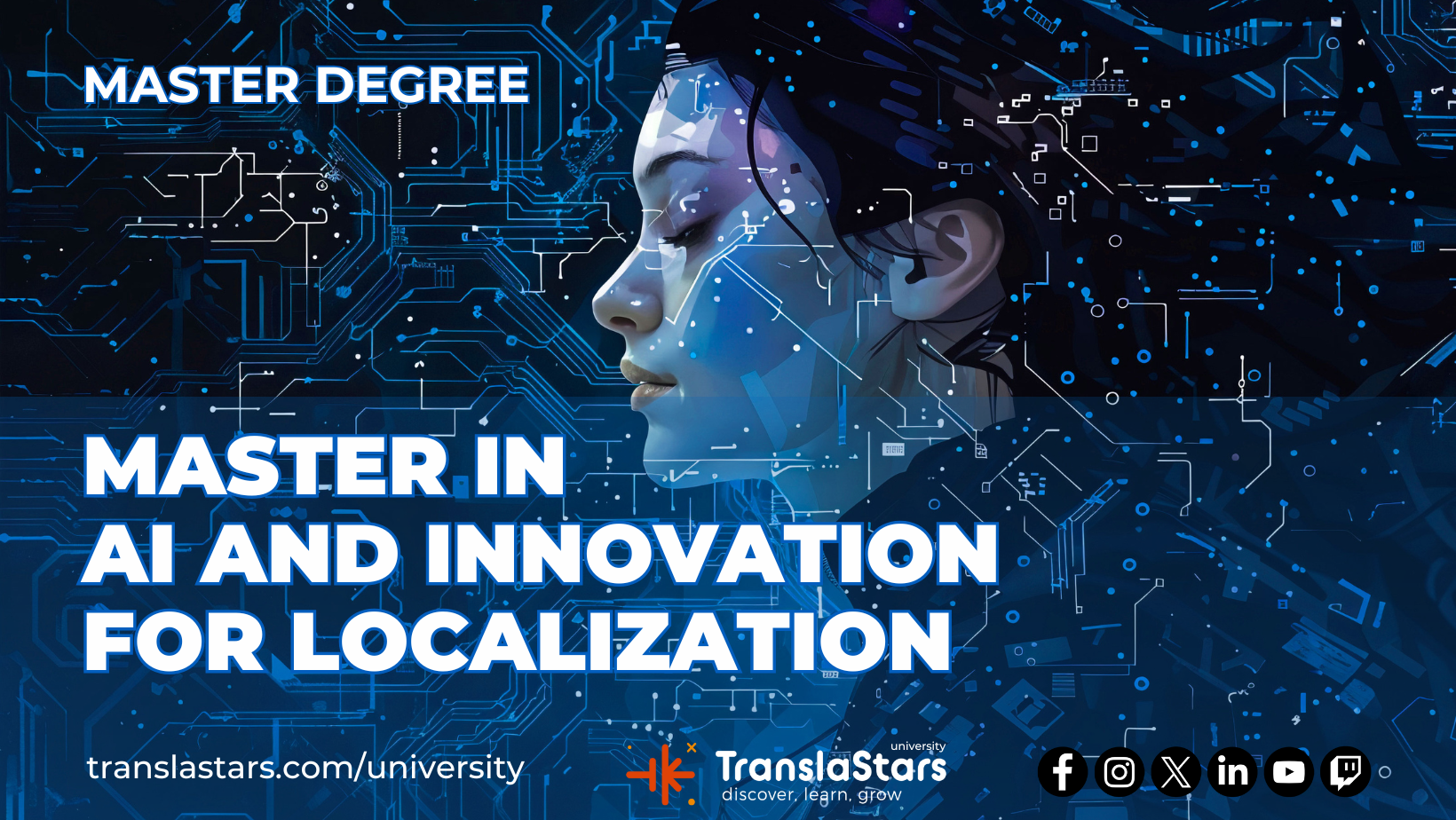
The fastest way to build AI skills for localization is through targeted training. TranslaStars offers a comprehensive AI curriculum designed specifically for language professionals:
- Master in AI and Innovation for Localization (IV Edition) - The flagship program covering AI agents, LLMs, machine translation, prompting, and strategic implementation. Learn more
- Building AI-Driven Localization Pipelines - Practical course on creating automated AI workflows for translation and localization. Explore courses
- Vibe Coding for Localization with Crowdin - Learn how to code with AI assistance to build custom localization integrations. See the catalog
OpenClaw: Your AI assistant for total freedom
One of the most powerful shifts in 2026 is that you no longer need to rely on others to build the tools you need. With OpenClaw, you get an AI assistant that gives you total freedom - you can create your own workflows, automate repetitive tasks, connect tools, and build custom solutions for yourself and for clients. It is not about learning a single tool; it is about having the power to create whatever you need, whenever you need it.
The full course catalog also includes AI Summer Camp, AI-Generated Voices for Localization, and many more programs that cover everything you need to master AI in this industry. Browse all courses
2. Build Strategic Management Skills
Why management skills matter more than ever
As the industry evolves, the most valuable professionals are not just those who translate - they are the ones who can build and manage translation departments, establish strategy, oversee quality frameworks, and lead multilingual content operations. Companies need people who understand program management, vendor management, budgeting, and workflow optimization at a strategic level.
These skills open doors to senior roles: Localization Program Manager, Global Content Operations Lead, Language Technology Director - positions that command higher salaries and offer greater career stability.
Where to develop them
TranslaStars offers a complete track for building these management skills:
- Localization Management Academy (LMA) - A complete track covering LPM fundamentals, quality metrics (LQA, DQF, MQM), vendor management, agile localization, and more. Discover LMA
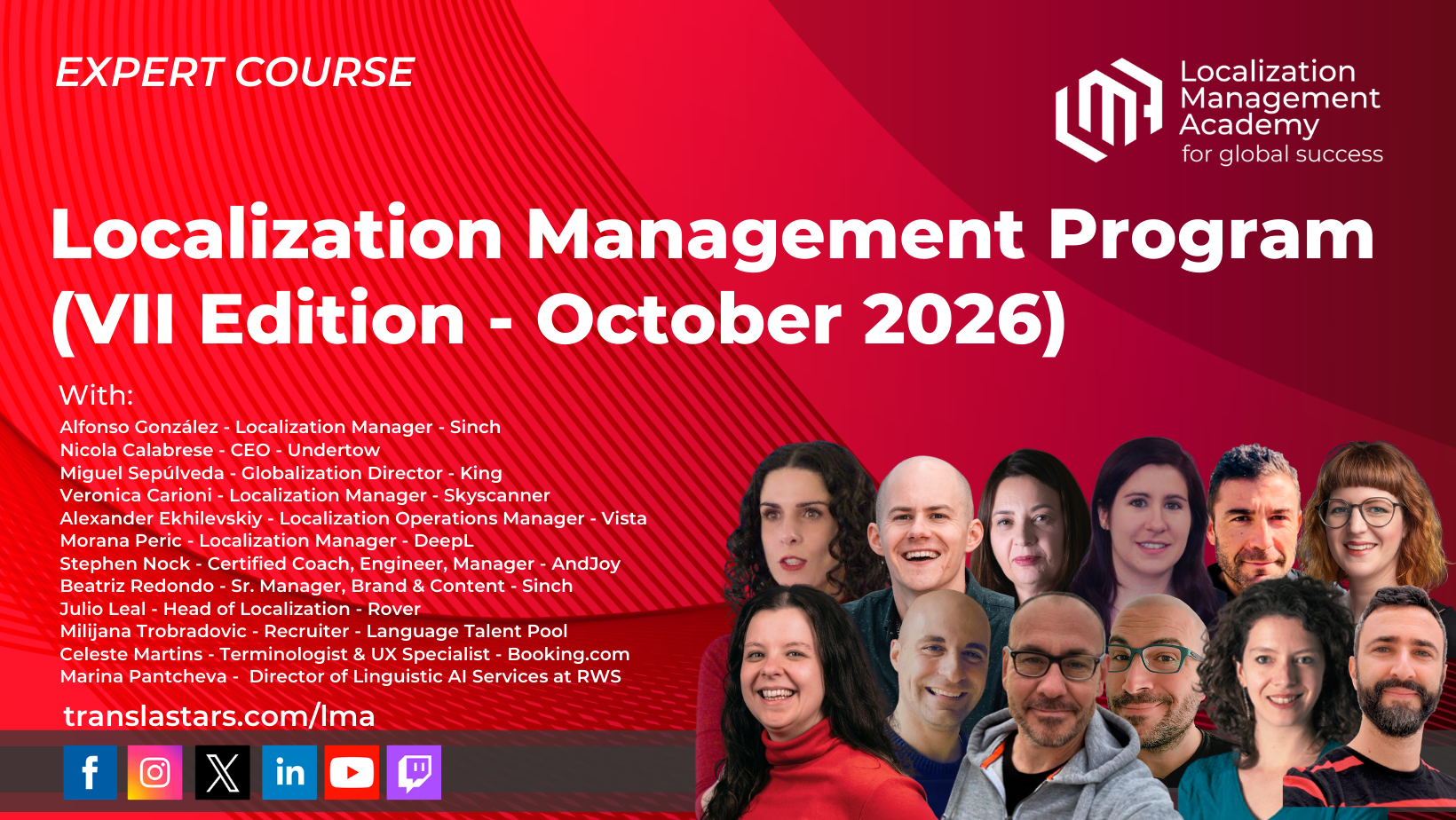
- Localization Management Program (VII Edition, October 2026) - The most comprehensive program for aspiring and current localization managers. Covers everything from internationalization to continuous localization and globalization strategy. View the program
- Global Content Operations: Strategic Multilingual Orchestration - A new flagship course on orchestrating multilingual content at scale. Explore catalog
Bonus: Stay sharp on tool selection
Part of strategic management is knowing which tools to use. The TranslaStars CAT Tool Comparator and Recommender helps you compare over 200 translation tools - CAT tools, TMS platforms, MT engines, QA tools - so you can make informed decisions for your team or your freelance workflow. Knowing the landscape of available tools is a key strategic skill that sets you apart.
3. Attend the Right Events
In-person events - the best investment in your network
In-person events remain the best way to build real connections, meet potential clients, and learn from industry leaders. Here are the most important conferences to watch in 2026:
- LocWorld - The leading conference series for global content and localization. Rotates between North America, Europe, and Asia. locworld.com/events
- GALA WorldReady Conference - The Globalization and Localization Association's annual flagship event. gala-global.org
- tekom/tcworld - Europe's largest conference for technical communication and localization. tekom.de
- ELIA Together - The European Language Industry Association's networking event. elia-association.org
- ATA Conference - American Translators Association annual conference. atanet.org
- Game Global Summit - Specialized event for game localization. locworld.com
Online events and virtual summits
If travel is an issue, many of the above offer virtual attendance or have on-demand recordings. Additionally:
- TranslaStars University webinars - Regularly hosted with industry experts covering AI, tools, career development, and more. Join
- GALA webinars and Academy courses - Free and paid sessions throughout the year. gala-global.org/academy
- Nimdzi Live - Weekly industry insights and interviews. nimdzi.com
4. Follow the Right People and Stay Informed
Podcasts you should be listening to
Podcasts are one of the best ways to stay current while commuting, exercising, or working. Here are the most influential ones in localization:
- Glocalization - Hosted by Andre B., this podcast explores the intersection of globalization and localization with top industry leaders. A must-listen.
- Speaking of Translation - Hosted by Eve Bodeux and Madalena Sanchez, covering translation technology, business, and career insights.
- The Localization Fireside Chat - With Gillian V. and Kirti V., offering candid conversations about the localization industry.
- Multilingual Podcast - From the team behind Multilingual Magazine, featuring deep dives into language industry topics.
- LocLunch Podcast - Interviews with localization professionals from around the world.
Blogs and news sources
- TranslaStars News - Daily curated industry news covering AI, translation, and language industry developments. Bookmark it
- TranslaStars Blog - In-depth articles on AI for localization, career tips, tool comparisons, and industry insights. Visit the blog
- Nimdzi Insights - Research reports, market data, and language technology analysis. nimdzi.com/insights
- Slator - Daily news and analysis of the language services market. slator.com
LinkedIn: Build your network strategically
Follow localization managers from major companies (Uber, Netflix, Spotify, Canva, Airbnb), LSP CEOs, AI researchers in NLP, and active community contributors. Engage thoughtfully with their content - comments and shares build visibility. The professionals who publish and engage consistently attract the best opportunities.
5. Explore Opportunities - Job Boards and Beyond
TranslaStars Job Board
The TranslaStars Job Board aggregates vetted localization opportunities from multiple sources. It is updated daily, fraud-filtered, and designed specifically for language professionals:
- Search by role type (freelance, in-house, remote)
- Filter by language pair and location
- See the latest postings updated daily
- Fraud-filtered - no spam or suspicious listings
Other sources to check regularly
While the TranslaStars Job Board is a great starting point, do not limit yourself to one platform. Cast a wider net:
- LinkedIn Jobs - The largest professional network with localization-specific filters. Set up alerts for keywords like "localization manager," "translation project manager," "language specialist."
- Indeed - Broad job aggregator with good coverage of in-house and agency roles.
- Remote work platforms - We Work Remotely, Remote.co, and FlexJobs frequently post localization roles.
- ProZ and TranslatorsCafe - Traditional translation job boards still active for freelance opportunities.

Which step will you take first?
The five steps above are not random suggestions. They form a coherent career strategy:
Step 1 ensures you are not left behind by AI. Step 2 builds the management skills that command higher salaries. Step 3 connects you with the people who can hire you or partner with you. Step 4 keeps you informed and visible. Step 5 puts you in front of the right opportunities.
You do not need to do all five at once. Pick the one that matters most to you today, commit to it for a week, and build momentum. The localization industry rewards action, not intention.
Your 2026 career growth starts today.
Pick one step from this plan and commit to it this week. Whether it is enrolling in an AI course, registering for a conference, updating your LinkedIn profile, or browsing the job board - the best time to start is now.
Explore TranslaStars courses • Follow industry news • Browse the job board
Remember: The professionals who invest in their skills today will be the leaders of tomorrow. Start building your future now.




Courses
Free Courses/Resources
LMA
TranslaStars University
Media Library
Contact
Support / Help / Documentation
Data